Melchizedek's Supper: Bread, Wine and a Blessing from the Prefigured Christ

breadwineMelchizedek is a mysterious Old Testament figure. He appears on the stage out of nowhere, it seems. Then he jumps right back into obscurity.

If you’re unfamiliar with the story, you can read it in Genesis 14:17-24. Abram and his army of servants and allies, defeated an invading army and rescued the people and possessions of Sodom, his nephew Lot among them. After this surprising victory, Melchizedek appears on the scene with bread, wine and a blessing. After blessing Abram and God, he receives a tenth of all the spoils from Abram’s hand. Then that’s it. He’s gone.

We do know a few other things about him. His name means king of righteousness, and he was the king of Salem (which means peace). He’s also referred to as a priest of God Most High. Ps. 110 speaks of Christ being a “priest forever after the order of Melchizedek” and Hebrews 7 builds on that.

For the purposes of my post, it’s clear that Melchizedek is a type of Christ (see Heb. 7:3). He is a Priest-King, and Jesus is the Prophet-Priest-King. Considering that God knew all along that Melchizedek was a type of Christ, and since God orchestrates all of history, including the events of Genesis 14, I think there is something for us to learn here from Melchizedek’s bringing bread and wine to Abram.

I was reading the 8th portrait of Christ in Bob Beasley’s book 101 Portraits of Jesus in the Hebrew Scriptures, when I was struck by this simple line, “He [Melchizedek] brings bread and wine, elements we use in the Lord’s Supper.” Melchizedek brought bread and wine, like in the Lord’s Supper. So I thought, what does this teach me about the Lord’s Supper? The answer might seem too simple and obvious but I think it is quite important.

The Lord’s Supper is a blessing that Jesus brings to us. It isn’t just a rite to be observed, but Jesus, comes to us bringing bread and wine. He blesses us through the meal He shares with us. As Melchizedek blessed Abram along with the bread and wine He shared with him, so Christ blesses us as we partake of holy communion.

The supper, after all, is Christ’s idea, His ordinance for His church. He says the elements represent His body and we should remember Him as we eat of it. In previous posts on the Lord’s Supper, I’ve shown how the idea of sharing a meal with God is behind the Lord’s Supper in part. I mentioned before that Wayne Grudem highlights Ex. 24:9-11 and Deut. 14:23-26 as examples of God’s eating with men. Perhaps this story of Melchizedek foreshadows those meals as well.

In the Supper, all the blessings we get come from Christ. Ultimately the bread and wine come from Him as well. This coming Sunday we’ll partake of the Lord’s Supper at my church, and I am eager to receive a blessing from the hand of Christ my Melchizedek. A blessing given through my enjoyment of the joy of wine, and the sustenance of bread. May Jesus be ever more my blessing, my joy, and my life’s sustenance. Amen!

Racial Reconciliation at BJU

A while back I heard about a movement among Bob Jones University alumni to confront the institution about its racist roots. At please-reconcile.org, various proofs of racist policies and actions in the history of the school were brought forth. Always the goal was to get the college to own up to their mistake, admit that they have made an about face on this issue and to apologize.

That actually happened. BJU has put forth a statement on race in which they apologize for following their Southern culture more closely than the tenets of Scripture. I applaud them for “caving in”. The truth is, it’s sometimes harder to admit wrong when someone else points it out to you, than if you yourself see the problem. Wisely, BJU realized this wasn’t some attack on their institution’s name, but represented a real concern for the reputation of Christ.

I don’t think everyone has to apologize for all grievances, especially those of a long time ago. In this case I think it was appropriate, however (as some of the racial bias persisted even in the last 10 years). I’m glad BJU is doing what is right and setting an example. Here is an excerpt from the university’s statement:

Bob Jones University has existed since 1927 as a private Christian institution of higher learning for the purpose of helping young men and women cultivate a biblical worldview, represent Christ and His Gospel to others, and glorify God in every dimension of life.

BJU’s history has been chiefly characterized by striving to achieve those goals; but like any human institution, we have failures as well. For almost two centuries American Christianity, including BJU in its early stages, was characterized by the segregationist ethos of American culture. Consequently, for far too long, we allowed institutional policies regarding race to be shaped more directly by that ethos than by the principles and precepts of the Scriptures. We conformed to the culture rather than provide a clear Christian counterpoint to it.

In so doing, we failed to accurately represent the Lord and to fulfill the commandment to love others as ourselves. For these failures we are profoundly sorry. Though no known antagonism toward minorities or expressions of racism on a personal level have ever been tolerated on our campus, we allowed institutional policies to remain in place that were racially hurtful.

On national television in March 2000, Bob Jones III, who was the university’s president until 2005, stated that BJU was wrong in not admitting African-American students before 1971, which sadly was a common practice of both public and private universities in the years prior to that time. On the same program, he announced the lifting of the University’s policy against interracial dating.

Our sincere desire is to exhibit a truly Christlike spirit and biblical position in these areas. Today, Bob Jones University enrolls students from all 50 states and nearly 50 countries, representing various ethnicities and cultures. The University solicits financial support for two scholarship funds for minority applicants, and the administration is committed to maintaining on the campus the racial and cultural diversity and harmony characteristic of the true Church of Jesus Christ throughout the world.

Reformation Day Reading

Happy Reformation Day!

This is the 491st anniversary of Martin Luther’s nailing his 95 Theses to the door of the Wittenburg Church. Because of the printing press, this step by Luther was soon the spark that kindled the Reformation fires across much of Europe. And as Dan Phillips points out, if we enjoy the privilege of freely worshipping in a non-Catholic, Christian church of almost any Protestant denomination (or even no denomination), we have Martin Luther to thank. We don’t need to idolize Luther, however. Instead we can be thankful for God’s mercy in providing us with the Reformation and the blessings we still enjoy because of it.

Here is some reading for you this Reformation Day.

Our Prodigal God

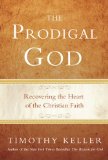
Prodigal has come to mean, in the Christian vernacular, a reprobate wretch. The word more accurately describes wasteful spending, or even just someone who is free with money. Tim Keller, following Spurgeon’s example, uses the term to refer to God — God as incredibly free with His grace and love. God is our prodigal God, in this sense.

Keller has authored a book with that title, and it is to be published by a secular publishing house. I hope the title grabs people’s attention and gets more to take a look at his book.

The book focuses on the story of the Prodigal son, and in the introduction Keller points out a sermon by Edmund Clowney as being very influential in his Christian life, and a formative influence for the book. Crossway has kindly made the print version of that sermon available online for free (as a pdf) [HT: Justin Taylor]. It comes from Crossway’s book entitled Preaching Christ from All of Scripture by Clowney. I really enjoyed the sermon when I read it from my copy of the book a couple years back, so I wanted to be sure to link to the online version of the sermon. Here is the conclusion of the sermon, but I encourage you to read the whole thing, its a quick and easy, yet spiritually moving read.

Come home to the Father’s love, to the joy of Jesus’ feast. Are
you a prodigal, far from the gate of heaven? Jesus now comes to lift
you up. Are you a smug Pharisee, flaunting the filthy rags of your selfrighteousness
outside the Father’s house? Hear the words of Jesus:
his Father calls you to repent and come home as a little child. Or are
you somehow both at once: prodigal and proud, debased but despising?
No matter; cast all away and hold fast to Jesus.

Or are you a believer? Has Jesus found you like the lost sheep and
borne you home on his shoulder? Then consider the demand this
parable puts on you. You have tasted of heaven’s grace. You know the
embrace of your Father’s love. You know that he rejoices over you
with singing. What does heaven’s joy, his joy, over lost sinners mean
to you?

You say, “It means that I, too, must welcome sinners, be ready to
eat with them, even as I have been brought to his table.” Is that
enough? The true Son, who knows his Father’s heart, did not simply
share with sinners his robe, his ring, his sandals. He went to find
them to bring them home. Where will you look today?

“Whoever does not love does not know God, because God is
love” (1 John 4:8, NIV).

Legalism And Its Antidotes

Recently we’ve been discussing the sticky issue of legalism. It’s hard to define, and its easy to use the term as a perjorative against those you think are wrong. The term is still important, however, because it describes a sin which is deadly. A sin which in many Christian circles is able to walk incognito, wearing a mask of holiness. If anything deserves to be studied, legalism does.

I came across an excellent article on legalism by Dominic Smart hosted at beginningwithmoses.org. I want to provide an excerpt where he discusses what Legalism is, and then encourage you all to go read the entire article.

Legalism isn’t a matter of having rules, structures, limits or instructions in our congregations or individual lives. While they can be overdone, and often are by people of a certain temperament, they are necessary for godly order in any fellowship: God has given many to us in the Scriptures. The opposite of legalism isn’t lawlessness (antinomianism, as some like to call it), which is nothing more than anarchic pride. Nobody is delivered into that. Christian freedom isn’t freedom to do whatever you want: down here none of us is safe to be let loose with such a freedom; up there – well, we’ll be different then!

Legalism is primarily a God-ward thing. It’s a way of making and keeping yourself acceptable to God. From this flows the legalism that is directed towards one another It’s a way of scoring sanctity points in our fellowships, and exerting what one postmodernist called a “truth regime” – it’s about pride, power and control. It simultaneously glorifies man and “unsecures” man. Thus its true opposites are grace and faith.

Yet it is so plausible. The need for order, structures and boundaries feeds our quest for control. Our very ability to keep some rules feeds our pride and gives us the impression that our relationship with God is somehow founded upon this ability. But in the same day, our inability to keep others feeds our despair, which in turn generates more rules and a more strenuous effort to keep them. Since laws and rules can be helpful, legalism seems to be on to a winner.

It often arises out of a good motive: to be holy. We don’t want sin to rule over us, we don’t want to grieve God or to stray from his path. And it is a narrow path compared to the one that leads to destruction. So in order to avoid big sins we add rules to God’s word – hedging sinful territory around with codes that are intended to keep us from it. It is the well-intentioned, keen and committed who are most prone to it. The half-hearted Christian couldn’t really care enough to veer towards legalism (though he or she makes up for it with many other errors). It was the scribes, following good Ezra, who developed “the traditions of men” which people preferred to the word of God: a preference that Jesus blasted in Mark 7.

But all this focuses the mind on self. It takes the mind and heart away from Christ, the Proper Man. It takes our faith away from His sufficiency and misplaces it upon ours. We live to achieve his approval; we forget that we are already alive and accepted in Christ. Ever so plausibly, we are sold a different gospel: one that isn’t really a gospel at all. And the desire not to sin in some big way can be little more than a mask to hide our lack of faith in Jesus, “who has become for us wisdom from God – that is, our righteousness, holiness and redemption” . (1Cor 1:30). Holiness is not a matter of living on eggshells with a God who is reserving judgement on us and might turn us away at any moment.

It really is a deadly false thing, this warped alternative, this lie, this all-pervasive and hideous distortion of Christian living…

Dominic goes on to give 8 reasons why legalism is deadly, and he follows those up with eight antidotes to legalism. The article is a bit lengthy but it will be worth your time to read it.