Understanding Lordship Salvation

Many a fundamentalist has a real hard time with the idea of “Lordship Salvation”. (With Calvinism too, but that is another post…) They have a “knee jerk” reaction against these doctrines, and yet in many ways I would view this as healthy. You look shocked, but let me explain. Fundamentalists often misunderstand these views, and with regard to “Lordship Salvation” they think of it as a “works-based salvation”. And to react strongly against works based salvation is very commendable and healthy.

But Lordship Salvation is not a works based salvation scheme. Let me say that again, Lordship Salvation is not works based salvation!

I just finished reading a series of articles which in my opinion is extremely helpful for anyone desiring to understand Lordship Salvation. And in all honesty, to understand Lordship Salvation you need to go to the horse’s mouth, so to speak. I have little patience for people who claim to seriously hold a position on a debated issue yet who have never read anything written by the other side.

Well, here is your chance. Nathan Busenitz at Pulpit Live (affiliated with John MacArthur’s church) has just finished a series of five posts critiquing Lou Martuneac’s new book In Defense of the Gospel: Biblical Answers to Lordship Salvation. Lou is a fundamentalist who has concluded that Lordship Salvation is another gospel. And Nathan explains how Lou’s conclusion is wrong by showing how Lou misunderstands Lordship Salvation. So in Nathan’s critique of Lou’s book, he provides a clear explanation of what Lordship Salvation really is.

So without further ado, let me provide the links here to Nathan’s critique of this book, and let me encourage you to check out these posts in order to have a better understanding of Lordship Salvation.

UPDATE: Here are two last links to Nathan’s final discussion of Lordship Salvation. Also, I threw in a link to the last post of Phil Johnson’s personal testimony in regards to this debate. Phil’s posts are very informative as to the history of the Lordship debate. He provides links to all the posts in that series at the bottom of the post linked to below.


AddThis Social Bookmark Button

The People Clapped, He Sat Down, and the Fundamentalists Went Wild

UPDATE: For those  who have been following this, I want to provide a brief update. You others, read the original post first and then come up here for more!

I  should point out the comments under Bixby’s post (linked to below) are worth reading. Also, Scott Aniol gives a post differentiating his beliefs  from the philosophical position mentioned in Bixby’s post—it is worth reading to understand Scott’s position more. I stumbled across a good summary post by Rick Pidcock which does a better job of chronicling the debate than I did (there are some good comments by Tom Pryde, Ken Fields, and  Rick in the comment section). And no less than Scott Aniol, pointed my attention to a really good, Christ-honoring take (by Phillip Gons) on all of this (although  Phillip  doesn’t really take sides with respect to the music debate).

Most worth reading, is Ken Fields’ newest post, where he reproduces the thoughts of Christian hip-hop artist named Shai Linne. Shai originally posted his thoughts in the first SI thread on this issue. I read them and appreciated them then, but forgot about them when making this post. Ken got Shai’s permission to repost them here. It is worth a read, as Shai responds in a helpful and gracious way. Shai sheds more light on the whole issue of Christian rap in his comments in the discussion under Ken’s post. Definitely, well worth the read—so thanks again Ken! (Sorry, I’m too strapped to fork out a shirt!)

Ryan Debarr gives some further thoughts about this whole controversy—his post is definitely not a “cookie cutter” argument defending CCM. He makes some good observations and expresses some proper concern over the flippant use of terms like “blasphemy and apostasy”.

Finally, Bixby chimes in again (we are still waiting for his “alternative” springing from the post linked to of his below) stressing a need to remember a Gospel Centered approach to worship. Worship is not primarily us giving back to God, but rather us experiencing the benefits of Christ’s vicarious humanity (and his death). Bixby helpfully points us to Parts One and Two of Dan Cruver’s Gospel-Centered Worship series. Do go check those posts out!


Ken Fields will have to forgive me for using a line from his  recent post  for my title. There has been quite the blog storm recently, and those words were the best description I have found.Last Sunday, my church had Curtis Allen (a Christian rapper aka “Voice”) come to perform for our Aeropagus—a culture club of sorts—after the Saturday evening service at our downtown site. Since Curtis was present for the worship service, Pastor John Piper invited him to sing for the service, and he sang one song as a special number—a testimonial song that was quite tame as far as rap songs go. Well, as Ken said, “the people clapped, he sat down…and the fundamentalists went wild!”

Justin Taylor posted a video-clip  of that service, and Sharper Iron linked to it. One of the most heated (non KJV only) discussions  in SI’s history followed (it grew to over 30 pages in near record time). Other fundamentalist blogs joined the many SI posters in a loud disgust over Piper and any fundamentalists which would condone the use of rap music in worship (see here and here). More discussions were held on SI (here and  here), and an incredibly harsh post  was given by Scott Aniol.  Other fundamentalist bloggers joined SI posters in expressing surprise at the mean attitude apparent in some who were so vocal in their bashing of rap or CCM type music, see here and here and here. There was even an apology and a retraction. Lastly,  Bob Bixby offered a really good analogy regarding the  future “movement”  of some fundamentalists which stresses a “high view” of music. I really recommend reading his post, even if you skip all the other links above. [Note my listing of these links is not necessarily in chronological order–they all were from 10/31 through 11/2, however.]

I linked to all  of these discussions  on purpose. Some of my readers  may not be privy to all the “young fundamentalist”  blogs out there (and I am sure I missed some posts, too) and may have missed this whole discussion. But beyond that, I think this whole discussion is instructive. It reveals the sometimes shameful attitudes of some fundamentalists—I particularly was shocked by the willingness for many to just write off Piper completely because of this “wrong” decision. It also shows how so many refuse to let music be a matter of personal conviction. They prefer to make judgments on those who do not agree with their position, or worse to mandate a certain musical style—all this and yet no Scripture directly bears on musical style. Yes, we can apply Scriptural principles and we should, but such application is not equivalent to a direct command. Our interpretation and application of them is important for us but is not universally binding. And lastly, this discussion informs us concerning the musical debate. There were interesting arguments on both sides, and they may prove enlightening to some of my readers.

I would like to shift the discussion now  from the  recent  brouhaha to the music debate. And I would like to make three points. [Just in case you were interested, you can see my comments in the initial SI thread about this whole thing here.]

1) The “high” art vs. “low” art (or “pop” art) distinction.

Not everyone who has been involved in the recent music debate makes use of this argument. But many do (see Bixby’s post where he suggests that many who do major on this argument are part of a “movement”). This view posits that classical music styles are “high” art and thus more becoming of the worship of our God, than the crass “low” art styles.

Recently I came across some great articles by Kevin Twit (of Indelible Grace) where he argues that such a distinction is artificial and a relatively recent innovation. Let me provide a few quotes from him, as I think they bear directly on this point.

The dichotomy between high art and pop art is, at best, both unhelpful and musically and historically rather naive. Actually the historical basis of this is a rather racist argument. This distinction is really only about 150 years old, emerges during the 19th century as people try to separate themselves from the massive influx of Eastern European immigrants, and falls prey to a classic logical fallacy: just because something is popular does not mean it is of inferior quality! It may mean that it is of great quality and has connected with a large number of people for really good reasons! In addition, the attempt to make a big distinction between folk art and pop art fails to understand how popular art functions. (see William Romanowski’s recent book Eyes Wide Open pg. 72-75 for a wonderful discussion of this issue! Or if you want to study this even more in depth, track down Lawrence Levine’s “Highbrow, Lowbrow: The Emergence Of Cultural Hierarchy In America”) — from this article (see my recent post for a more legible version).

…the high art/ low art dichotomy….has become such a part of our vocabulary that it seems like a self-evident truth. Low art is said to be inherently inferior to high art. This is the crux of the arguments of people like Allan Bloom and Ken Myers. However there are a number of serious problems with this simplistic reduction.

First of all it is musically naive. As Lawrence Levine points out in an insightful study, most discussions regarding high and low art can’t define where the dividing line is. I would suggest that this is because the line is largely arbitrarily drawn….Music is cultural activity, as William Edgar points out….The attempt to find a universal music that is a-cultural is misguided. Yet this is often what traditional, elitist, Classical musicologists attempt to do….

The second problem with the elitist view is that it constitutes a misuse of language. Levine argues (I believe rightly so) that we shouldn’t use “pop” as an aesthetic judgment, rather we should use it literally to mean that a piece of music has popular appeal. But who says that popular art is necessarily bad art? We must be very careful about automatically equating high art with tradition and intelligence, and low art with the poor, ignorant masses. Levine shows how in the 19th century in America, Shakespeare was pop art! The shift in America took place around the turn of the century and is closely connected with racism and the attempt of one segment of the culture to gain control. William Edgar also picks up on this historical phenomena. The high / low dichotomy in art is not an eternal fact it is a cultural development.

Thirdly, as Edgar points out, this elitist view actually lowers the standards of pop music because pop isn’t taken seriously. Do we send the message that all fields are worthy of our best effort except pop music?….Surely we would be better off to take pop seriously and encourage talented men and women to invest their energy in this field, than to simply dismiss it as unredeemable. —from this article (underline emphasis was italic in original).

2) A Eurocentric Bias.

There is another bias besides the one which  views its music style of choice intrinsically “higher” than others. There is a racist bent toward claiming that eurocentric music is the pinnacle of music form. I was surprised that so many people reacted so strongly against this claim. It is often easy to be blind to our racism, I guess. But seriously, a eurocentric music style is what people are defending, and the music styles they are objecting to stem from non eurocentric cultures. The charge of racism is not really all that painful. It merely points out that one particular culture is being preferred to others, there is a racist bent to this eurocentric bias. I believe it is fairly clear. People who hold to that view might not be meaning to be racist, but their is an inherent racism in the argument that “white” music is always best.

Now Ryan Debarr helped by pointing out  that there is a point to be raised in favor of such cultural bias. He mentioned that the eurocentric culture has arguably been most influenced by the Gospel. However, as even he admits, to argue from this point that any aspect of eurocentric culture (like music for instance) is invariably better than that of non eurocentric cultures is to say too much. And along these lines, in a recent article that I quoted, there is a strong case made that much of the music (not lyrics, but music styles and even poetic structures) used for worship in the eurocentric culture has been borrowed from the pop (and non Christian) culture of that era.

At this point, I would like to reproduce a comment that was made over at Zach Nielsen’s blog in a series of posts he has made critiquing the book Can We Rock the Gospel? by John Blanchard and Dan Lucarini. The comment was placed at the end of this post on chapter 7, and I will reproduce it here below.

At the root of these arguments is an air of ethnocentricity. In other words, there is a core assumption that ones own preference and cultural heritage (i.e. conventional western harmony) is the most evolved form of music. Seldom do the writers of these kinds of books acknowledge that the ancient music forms in the scriptures preceded conventional harmony and tuning. To do so would be to admit that they would hate the music that David danced to.

3) A Matter of Taste.

Finally, I would like to talk about taste. Some speak as if taste does not matter at all—classical style music is just always better and should be singularly used in praise to God. And yet some speak as if music is only a matter of taste. Taste is definitely a factor, but it does not have to be the exclusive factor.  

I was really blessed by a helpful analogy I found made by “Keith” over at NeoFundamentalist. I want to reproduce Keith’s thoughts since they were so helpful to me. They may be worth discussing in more length in the comments here. The following comments  can be  seen in their original context here. They are so good, that I fear I will take away from them unless I reproduce them in full. I hope this will not be breaking blogging etiquette to do so.  

The recent debates between the various types of fundamentalists over music leave me confused.

I think I would be called a musical and cultural elitist by some, but I also see no reason to hyperventilate over John Piper allowing a rap.

But to the bloggers and commenters, it all seems so either/or, why?

How is it not self evident that some music is better, as music, than other music?

Similarly, how is it not self evident that, while we should respect and properly use the best, we are not required to always participate in the best?

Food is just one example. The food at a fine French Restaurant is beyond question better, as food, than the food at McDonald’s. Trying to deny that is to deny meaning and objectivity and absolutes. Even so, does that mean that McDonald’s must be forbidden?

The fundamentalists of various types SEEM (I’m trying to understand here) to think that I must either (A) Say the French food is better and therefore never eat anything else (the elitists) or (B) Say that there is no such thing as “better” there is only preference you like French, I like McDonald’s (the “young” crowd).

Why can’t I say that the French food must be considered better even though I might eat McDonald’s more often and properly so for a variety of reasons?


The League of Tyndale & The Sacred Sandwich

Click to go see the League of TyndaleI want to use this post to introduce the League of Tyndale and their Sacred Sandwich! I can’t remember exactly how I came across this website but I’m glad I did.

The League of Tyndale is a group of “fellows” dedicated to promoting the Reformation Doctrine of Sola Scriptura. To learn more about them, check out their “Declaration of Our Practice and Purpose” page. However, that page does not properly represent who they really are. Their “Introduction” page  gives a better description of what they are all about. They believe the modern, or rather, postmodern church…

…has become too enamored with the world and all its trappings. They have slowly displaced the authority of the Scriptures with manmade traditions, cultural influences, and business practices that appeal to our earthly senses. Like the Hebrews in the wilderness, they have grown weary of God’s heavenly manna, and have desired a return to the tempting, but empty food of their captors in Egypt.

And so the league is attempting to promote the importance of God’s Word. They do this through an online “publication” of sorts, “The Sacred Sandwich”. But their tactic of choice is parody. And while they do link to some great articles and other sites  (follow the links from this page, or check out their collection of links here), they primarily advance their cause through pointing out the sheer ridiculousness of the modern church growth movement by means of humor.

I wish it wasn’t so funny, but their advertisement, for instance, for Joel Osteen’s “Your Best Teeth Now” toothpaste, is just too hilarious! You will definitely get a laugh as you check out their other “advertisements”. And then they have a photo gallery complete with at times, hilarious, descriptions. You’ll need to check out their cartoons, and other features too.

If you like what you see, consider joining the cause! I did. They even gave me a great graphic to put on my blog (check the sidebar).

While  they definitely are funny, the antics of the League of Tyndale should give us pause to reflect soberly on the  state of the wider evangelical church today. May God be pleased to give us a genuine revival to shake us from this sad state. May He continue to bless the efforts of those who sincerely prize His Word.


∼striving for the unity of the faith for the glory of God∼ Eph. 4:3,13 “¢ Rom. 15:5-7

Reformation Day and Unity

Ulrich ZwingliToday  is Reformation Day!   Yes, 489 years ago this day, Martin Luther nailed  his 95 Theses against indulgences on the door of the church in Wittenburg, Germany.   We are still reaping the blessings from the Reformation which followed that action.

One of the key players in the Reformation was Ulrich Zwingli (pictured on the right).   He is not as well known as Luther, his contemporary, or John Calvin, who followed in his footsteps.   Zwingli led the Reformation in Switzerland, where Calvin would later minister in furthering the influence of that Reformation.

Zwingli was more moderate in his approach toward reform, and simply preached on the text of Matthew for several years in his pastorate at Zurich, Switzerland.   After years of preaching he worked toward reform using the existing channels of authority—working with his local Canton authorities and engaging in different debates in different conferences held to look at doctrine.   His patience paid off and many of the unBiblical traditions from the church of Rome were eventually thrown off, as his doctrine become more and more widespread throughout Switzerland.

I must say that I was reminded of Zwingli and his influence through some emails from Sam Storms of Enjoying God Ministries.   I am on his email list (which you can join by clicking here) and he sent out two articles on Zwingli’s life which were very interesting to read.   They are  available online at EGM’s website: here and here.

Anyway, Storms pointed out something about Zwingli that really got me thinking.   Zwingli was basically Baptist in his views on the Lord’s Supper.   He, along with many a Baptist, viewed the bread and wine as purely symbolic: there was no presence of the Lord Jesus Christ at the Supper.   Most Reformed people agree with Calvin that there is a spiritual presence of Jesus in Communion (see this previous post  of mine defending that view).   Luther, however, strongly disagreed with Zwingli and taught that Christ was present with the elements (although he denied Roman Catholicism’s transubstantiation belief).

Let me here give a quote from Storms’ second email on Zwingli (the information is also available in his second article linked to above) concerning the outcome of a conference held to try to get Luther and Zwingli to come to an agreement on this point.

The dialogue at Marburg initially looked hopeful. Both parties jointly affirmed 14 articles of faith (such as the Trinity and justification by faith alone). But they couldn’t agree on the nature of Christ’s presence in the elements.

The debate proved fruitless. Luther stubbornly insisted on the literal force of the words: “This is my body,” while Zwingli, no less stubbornly, pointed to the words of Jesus: “It is the Spirit that quickeneth; the flesh profiteth nothing; the words that I have spoken unto you are spirit and life.” The dialogue was often bitter:

Zwingli: “I remain firm at this text, ‘the flesh profiteth nothing.’ I shall oblige you to return to it. You will have to sing a different tune with me.”

Luther: “You speak in hatred.”

Zwingli: “Then declare at least whether or not you will allow John 6 to stand?”

Luther: “You are trying to overwork it.”

Zwingli: “No, no, it is just that text that will break your neck.”

Luther: “Don’t be too sure of yourself. Our necks don’t break as easily as that.”

One final meeting was arranged. With tears in his eyes, Zwingli approached Luther and held out the hand of brotherhood, but Luther declined it, saying: “Yours is a different spirit from ours.” Zwingli said:

“Let us confess our union in all things in which we agree; and, as for the rest, let us remember that we are brethren. There will never be peace in the churches if we cannot bear differences on secondary points.”

Luther replied:

“I am astonished that you wish to consider me as your brother. It shows clearly that you do not attach much importance to your doctrine.”

The split was final.

I was struck by the desire of Zwingli to have a real unity with Luther in spite of differences over the finer points of Communion.   And I was saddened to see Luther’s harsh reply.

This Reformation Day, I am reminded that a reformation spirit is indeed necessary.   The break from Rome was necessary as the Protestant church returned to the important truths regarding salvation so clearly taught in Scripture.   I think the original fundamentalist movement was an attempt to apply that “reformation spirit” of old to the problems of modernism and liberal theology.   And again I applaud that spirit as necessary for the defense of the important Biblical doctrines (the fundamentals, if you will).

However, we as a church are called to unity (see the verses that are at the end of each of my posts for proof).   And just because the papists of Zwingli’s day, or the ecumenists of our day will often use a call to unity to advance an attack on true Biblical doctrine, this does not negate the importance of unity.   The truly fundamental and essential doctrines are advanced through unity.   And secondary doctrines are just that.  

While it is important for modern day Luthers and Zwinglis to hold to differing doctrines on secondary matters, it is likewise important for them to purpose to maintain a real unity in the most important matters despite those same differences.   Only then, is the cause of Christ advanced in line with His own prayer in John 17. I pray that we as a church will humbly follow Zwingli’s example of prizing unity above our secondary differences.

For more info on Zwingli, see the posts referred to above by Storms, as well as this Wikipedia article on Zwingli (from which I borrowed this picture).   Also see this article by Paul Mizzi, this article and this one all found at Monergism.com.   And for more on Reformation Day, see the long list by Tim Challies, and a shorter one by my friend John Chitty, of blogposts dealing with Reformation Day.

2 Great Worship Songs from Fusebox

ccm_highlights.jpg

As I continue to post on good CCM music, let me remind you all that these posts will be somewhat limited. I have only been listening to CCM for the past two years or so now. And I only have so many records, and am only aware of so many songs and groups. However, I think the songs I will showcase in these posts will boost your confidence in CCM and serve to undo the myth that all CCM is totally shallow and worthless.

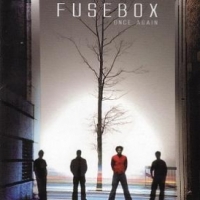
I thought I would be posting one song at a time, but that might not always be the way the posts come out. I really like the band Fusebox. They are not as widely popular (as far as I know—I haven’t heard them on the radio), but I really like their style. At first, the style seemed a little much to me. I was used to Phillips Craig and Dean, Steven Curtis Chapman, and Casting Crowns. But the style really grew on me. It is a “harder” sound, but it also stresses the melody and is acoustic, I think.  

Anyway, I really couldn’t bring myself to separate these two songs. I so often listen to them right after the other, and they are both great worship songs. They come from Fusebox’s latest CD Once Again. I really liked that CD more so than their first one, Lost in Worship.  

Before I give the lyrics and some links, I should let you know that only the first one was written by anyone from the group. The other song was written by Matt Redman, but I really like their version of it. So without further ado let me give the lyrics to these two songs.


Lord God Almighty

Verse:
You are the Lord God Almighty, righteous and holy
King of creation, Author of life
Glory and honor belongs to You Father
Lord God Almighty

Chorus:
Praise Your Name in all the earth
The heavens proclaim Your mighty works
Your kingdom reigns eternally
You are the Lord God Almighty

Bridge:
Hallelujah, hallelujah
Glory to Your name

Words and Music by Billy Buchanan


Once Again

Chorus:
Once again I look upon the cross where You died
I’m humbled by Your mercy and I’m broken inside
Once again I thank You
Once again I pour out my life

Verse 1:
Jesus Christ, I think upon Your sacrifice
You became nothing, poured out to death
Many times I’ve wondered at Your gift of life
And I’m in that place once again

Repeat Chorus

Verse 2:
Now You are exalted to the highest place
King of the heavens, where one day I’ll bow
But for now, I marvel at Your saving grace
And I’m full of praise once again
I’m full of praise once again

Repeat Chorus

Bridge:
Thank You for the cross
Thank You for the cross, my Friend

Repeat Chorus

Words and Music by Matt Redman


Click to order These songs are very poweful, and powerfully performed. The music in my opinion perfectly complements the message. “Once Again” is thoughtful and meditative yet also full of joy and loud praise. “Lord God Almighty” is a loud declaration of praise which I very much like to crank up and emphatically sing along with! It is definitely one song where a catchphrase from KTIS (the local Christian radio station) is true of me: “We are the ones with one hand on the wheel and one hand in the air!” I really enjoy these songs and the great message they contain.

Now you may notice that there are not multiple verses with a lot of extended doctrinal teaching in these songs. However, they are perfect vehicles for expressing your love and praise to God. The medium of pop music (or rock n’ roll, whatever you want to call it) is very much suited for expressing emotion. And often the songs, like “Lord God Almighty” will drive one main point across.  

To learn more about Fusebox, check out their website. Also, Billy Buchanan, the main guy behind the group, has his own myspace page with some of the music he is currently working on available to listen to for free. And they even have a few of their songs from Once Again available to listen to in their entirety for free! You just need to go here, and click on the song you want to hear. (You will have to listen online, though. But they do have the complete version of “Once Again”!!!)

You can purchase Fusebox’s music here. And you can learn more about Once Again here. For a quick review from CCM magazine, click here. And lastly, to hear a clip of “Lord God Almighty” click here.


∼striving for the unity of the faith for the glory of God∼ Eph. 4:3,13 “¢ Rom. 15:5-7