“The Christ of the Covenants” by O. Palmer Robertson

This is a review I’ve been meaning to write for some time. My brother gave me this book, back when I was a fairly new convert to covenant theology (or better a new ex-dispensationalist), a couple years ago. With my poor reading habits, I started (and sometimes finished), a good many other books before I actually finished reading this one. Don’t get me wrong, I love books and I love reading. I just am not as disciplined a reader as I should be.

Anyways, this book is not a covenantal theology manual, as some might suspect. The Christ of the Covenants, by O. Palmer Robertson, is a book about the many Scriptural covenants: the covenant with Noah, Abraham, and David, to name a few. Robertson departs from many covenant theologians in refusing to call the pre-Creation Divine determination to redeem fallen man an actual covenant, even as he argues for the basic correctness of the covenantal position on Israel and the church.

What this book does best is show how the covenants (and not dispensations) truly structure Scripture. Indeed without understanding the covenants, one will inevitably fail to understand much of Scripture.

Being raised a dispensationalist, I had a somewhat vague understanding that there are several covenants mentioned in Scripture. But I never understood how important and influential they really are. Interestingly, in an excursus focusing on dispensationalism, Robertson compares the Old and New Scofield Bibles and shows that contemporary dispensationalism now also emphasizes the importance of the Biblical covenants.

Starting with the basics, Robertson defines the term “covenant” against the backdrop of ancient middle-eastern covenants. He concludes that in Scripture a covenant is “a bond in blood sovereignly administered.” Robertson delves into the technical discussions surrounding this concept, but at the same time manages to keep it somewhat simple. A relationship is established unilaterally, and loyalty is demanded on pain of death.

Robertson moves on to discuss the extent, the unity and the diversity of the Biblical covenants. He makes a good case for understanding the Gen. 1-2 in terms of a covenant of creation, citing Jeremiah 33 and Hosea 6:7 as proof. He contends that after the fall, the Biblical story is a progression of covenants each more specific and more glorious, culminating in the new covenant which was begun and inaugurated with the death of Christ. Yet he maintains that there are important differences worth noting between the covenants, and particularly between the Law and the new covenant.

Then he begins a discussion of all the important Biblical covenants, starting with the covenant of creation. He admits that the focus of that covenant is on the prohibition concerning eating of the tree of the knowledge of good and evil, but claims the covenant establishes a gracious relationship whereby man is called to rule God’s creation and given instruction concerning marriage and Sabbath observance (he contends that there is a binding Sabbath principle to be observed on Sundays still today). He rightly emphasizes that ignoring the foundational teaching of how man should relate with the rest of creation has negatively impacted how Christians relate with and think about culture today.

Then he takes up the covenant of redemption which he sees as started in Gen. 3:15, and progressively developed through the covenant with Noah, Abraham, Moses, David, and then the new covenant. He develops each covenant insightfully, focusing on the Scriptural passages which establish the covenant idea, and applying important truths in a fresh way for all of us today. His discussion of the new covenant, and particularly Jer. 31:3-34, is particularly rich and insightful.

That is Robertson’s book. Except I should note he stresses how the idea and promise of Christ is developed through each covenant. And he also has a great excursus chapter on dispensationalism. In that chapter he tries to show how dispensationalism has grown and changed. He finds contradictions within the system, however, and argues the point that dispensationalism depends on a false dualistic view that the physical and the spiritual must necessarily be distinguished. His chapter on dispensationalism (a mere 26 pages in length) alone is worth the price of the book. It would be well for those studying out the dispensational/covenant theology debate to listen to Robertson’s insights. Perhaps I will try to flesh out the arguments in that chapter in a later post.

In conclusion, I highly recommend Robertson’s book. After 300 pages one gets a thorough education in the Biblical covenants. At times it may be difficult reading, but the rewards gained are worth the effort spent. Mostly, Robertson has a gift for cutting to the heart of the matter. And a detailed study on the nature and teaching of the Biblical covenants demands the attention of any Biblical student. This book will help you understand Scripture better, and will increase your wonder at the glorious workings in God’s plan of redemption.

This book is available for purchase at the following sites: Westminster Bookstore, Amazon.com, or direct from P & R Publishing.
On My Cross — FFH

With Easter upon us, I thought it would be good to post the lyrics of a song about the Cross. This particular song is very moving and thoughtful, as it focuses on Jesus’ suffering for each of us personally “” He died on our cross.
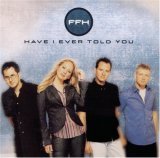
The song is by the group that also gave us another great song about the cross: “Still the Cross”. If you click on that link, you will see my post about that equally good song.

May you be blessed by the message of this song.


On My Cross

By Jeromy Diebler

Verse 1

How wide is Your love
That You would stretch Your arms
And go around the world
And why for me would a Savior’s cry be heard

I don’t know
Why You went where I was meant to go
I don’t know
Why You love me so

Chorus

Those were my nails
That was my crown
That pierced Your hands and Your brow
Those were my thorns
Those were my scorns
Those were my tears that fell down
And just as You said it would be
You did it all for me
After You counted the cost
You took my shame, my blame
On my cross

Verse 2

How deep is Your grace
That you could see my need
And chose to take my place
And then for me, these words I’d hear You say

Father no
Forgive them for they know not what they do
I will go
Because I love them so

Words and Music by Jeromy Diebler.  © 2001 New Spring Music (admin. by Brentwood-Benson Music Publishing Inc.). Recorded by FFH on the CD “Have I Ever Told You”. All rights reserved. CCLI song # 3438028.


To listen to this song, click on the link at the bottom of this post. There is also a challenging video to watch (with crucifixion scenes and Bible verses, etc.) that also plays this song in full in the background.

For a preview of the sheet music, click here (to purchase the sheet music click here). To purchase the CD, click here. For a link to a brief background to the song, on FFH’s website, click here.
On My Cross by FFH

Don’t Waste Your Life

One of John Piper’s best books has got to be Don’t Waste Your Life. In fact, it is the book I recommend for people unfamiliar with Piper’s misistry and message.

The book is great and the message is greater. We need to make our lives count for Jesus. Recently, I stumbled upon dontwasteyourlife.com, a new online venture of DesiringGod.org. The site is fantastic, and it is devoted to spreading the message of the book. I encourage you fellow bloggers to promote this site. They have a podcast with short videos, like the one below. And they have a blog. They also sell copies of the book, and the new group study kit (with special DVD).

With that being said, I encourage you to watch the short clip below, and to be encouraged anew to make your life count for Christ. But remember, lean on God’s grace. We can’t live this kind of a life without God’s amazing grace.

More on a Christ-Centered Kid’s Book

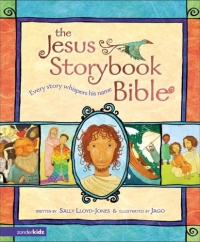
check out The Jesus Storybook BibleNot long ago, I passed along a recommendation for a new Bible Storybook called, The Jesus Storybook Bible. I called it a “storybook for preachers“, and explained why a Christ-centered Biblestory book could help many a preacher.

Well, I came across an excellent and informative interview of the author, Sally Lloyd-Jones about this book over at Eucatastrophe. I’m going to post a few excerpts here, and encourage you all to go read the interview. And more than that, you’ve got to get the book. I did, and I’m loving it. You can expect a review of it before too long.

I found it so moving when I started to discover how the Old Testament is basically one long record of failure””the failure of God’s people time and time again to live rightly, to rescue themselves””and that the stories in the Old Testament are all getting us ready for the One who is coming. They are all signposts to the True Hero, the True King, the True Prince, the True Servant, the greater David, the greater Daniel. The Rescuer.

As a child, I thought the Bible was packed with rules you had to keep (or God wouldn’t love you) and heroes setting examples you had to follow (or God wouldn’t love you). I thought, in short, that the Bible was all about me and what I should (or shouldn’t) be doing. Until I read a Story.

It’s the Story running like a golden stream underneath all the other stories in the Bible: the story of how God loves his children and comes to rescue them. Suddenly, I realized the Bible wasn’t about me and what I should be doing at all. It was about God and what he had done. And it changed everything…

It sounds strange, but the consistent reaction from many adults is that it makes them weep. (I think that’s good? Hope so!) Parents are reading it to one another as their devotional before bed. Pastors are using it to help them with their preaching. I heard someone call it, “the storybook for preachers” [she might be referring to my blogpost here!!].

And of course families are reading it together. Teenagers and college students have told me they are enjoying it. I heard from one dad that his young boys listen to each of the stories and as they near the end of each story, they whisper just one word: “Jesus.” I couldn’t ask for a better response. May all of us to be whispering his name in all the stories of our lives!

Be sure to read the entire interview!! (The comments discuss the Christ-centered treatment of the Old Testament in more depth.)

“Reclaiming the Two Books of God” by Don Sailer

351 footnotes will either make or brake a 100-page book. In this case, it is the footnotes (which document the many quotes)  which make the book so interesting. The books full title is Reclaiming the Two Books of God: Restoring Moral Sanity to the Church. And the book’s author is Don Sailer. Some of you might recognize the author’s name from his interaction in the comment threads over at Sharper Iron. Yes, he is a fundamentalist, but he also has a doctorate from Gordon-Conwell Theological Seminary and currently pastors an Evangelical Free Church, so he is not your ordinary guy.

And it takes an unordinary guy, sometimes, to take on an unpopular topic. His book focuses on the widespread rejection of Biblical authority in both church and mainstream culture. He traces the issues which led to the abandonment of Biblical inerrancy and one by one, all the cardinal doctrines of Christianity.

For such a difficult topic, the book is helped immensely by the opening discussion of the Scopes’ trial. With that colorful event as a backdrop, Sailer moves on to tackle the growth of modernism and the advancement of Darwinism. He then details both the fundamentalist defense of the Bible’s authority in the face of modernism and the extreme humanist reaction against naturalism. In all of this, Sailer is sounding a call for today’s church to return to a firm position on the Bible’s authority.

While there is obviously much that could be said about these subjects, Sailer focuses in on the intersection of the two books of God: Creation and Revelation. Using the Puritan imagery of two books, Sailer discusses how science and the Bible complement each other. He focuses on the arguments that stem from the Darwinian view of science — ultra naturalism, if you will. And he contrasts that view with the Fundamentalist view of Scripture.

Sailer aims to accomplish his impossible mission through the use of numerous quotes. These often help the book, by letting historical figures speak to the issues themselves. He quotes, for instance, many of the leading fundamentalists and modernists of the late 1800s and early 1900s. Sometimes, though, I must admit, the quotes tend to weary the reader. And at times Sailer seems to jump from contemporary authors to those of yesteryear without properly alerting the reader. All in all, though, the value of the book is in the many quotes.

A secondary main point of the book is to demonstrate how the two books of God do not contradict each other. Rather than attempting a full fledged creationism discussion, Sailer focuses in on one key point: the age of the earth. Leaning heavily on Gorman Gray’s book The Age of the Universe: What are the Biblical Limits?, Sailer presents a strong case for a mediating position. He defends six literal days of creation, but claims that the universe and the planet earth were actually created before those six days: there is an unspecified amount of time between Gen. 1:1-2 and 1:3ff, he argues (cf. Is. 45:18). He also notes that Scripture merely teaches that God created and ordered life on earth in the six days. This position avoids the problems of the Gap Theory (death before Adam), and joins young earth creationists in denying evolution and affirming a literal view of Genesis. At the same time, it allows for the scientific findings of the speed of light in relation to the size and age of the universe.

I must admit that two things struck me as odd in Sailer’s discussion of the age of the earth. First, I could see how strict Biblical literalists who claim the chronology in the Bible would point to the earth being only at most 10,000 years old, would argue that Don is doing the same thing the modernists did with science: accommodating his view of Scripture to science’s claims. Second, I thought it odd that the book which had hitherto spoken largely in generalities and affirmed all those who resisted modernism, now became so specific as to dismiss old earth creationist views (like the Day Age theory) and strict young earth views out of hand.

Yet this view of creation appeals to me. I admit that I can see how astronomical and geological claims for the age of the earth and universe would be a stumbling block to people’s faith if they are told the bible teaches expressly a young earth. But the Bible does not teach this directly, and so it is a needless stumbling block. (I know evolution vs. creation is a big enough stumbling block of its own, but lets not discuss this here.) So I can see how this view does much to “reclaim the two books of God”. I haven’t come to a definitive conclusion on this issue yet, but if you are interested in a short article defending a Day Age view of an old earth, check out this one by Justin Taylor. And then check out Gray’s book (the first few chapters of which are online).

In conclusion, I would heartily recommend Don Sailer’s book. It is only 109 pages and is quite easy to read, and the historical quotes he pieces together are worth the price of the book. Consider, for example, this gem from William Jennings Bryan:

They first discard the Mosaic account of man’s creation, and they do it on the ground that there are no miracles. This in itself, constitutes a practical repudiation of the Bible: the miracles of the Old and New Testament cannot be cut out without a mutilation that is equivalent to rejection…. (pg. 18)

His discussion of the Scopes’ trial is enlightening, and you will be fascinated by his discussion of the age of the earth. Through it all, Sailer stresses the importance of Biblical inerrancy and succeeds in making his case that we cannot abandon the Bible’s authority, or else we are left without any Christianity at all. And considering the issues facing today’s church, this is a case worth hearing.

Disclaimer: this book was provided by the author for review. The reviewer was under no obligation to provide a positive review.

This book may still available for purchase at Amazon.com.