“My Heart’s Desire” by David Jeremiah

This is a simply written, heartfelt devotional book. In My Heart’s Desire: Living Every Moment in the Wonder of Worship, David Jeremiah draws you in to the pictures he paints in the book. You find yourself in Heaven’s throne room, weeping and then rejoicing with John as the Lamb is found worthy to open the book. The awe and wonder which this book inspires is aimed to incite you to greater heights of worship. Indeed all of life is to be lived as a worshiper of Christ.

For those looking for light yet devotional reading, this book will do nicely. It’s not all that profound, but the message is straightforward. And yes, its convicting. May your heart for Christ be strengthened as you read this book.

This book is available for purchase at the following sites: Amazon.com or direct from Thomas Nelson.

About Book Briefs: Book Briefs are book notes, or short-form book reviews. They are my informed evaluation of a book, but stop short of being a full-length book review.

Calvinism by Fives

Calvinism seems to spread by fives: five points, five solas, and I bet we could think of other groups of five. Five Reformation countries (Germany, France, Switzerland, The Netherlands, England). Five key Reformers (Luther, Calvin, Zwingli, Huss, Wycliffe). Okay, I know Huss and Wycliffe came earlier….

As most good Calvinists, I know my fives. My TULIP and my Solas. Or do I? I’m starting to read a new book by Joel Beeke entitled Living for God’s Glory: An Introduction to Calvinism. I should mention that my copy is a review copy provided by Reformation Trust Publishing. (Click here for details on how to blog your way to a free Reformation Trust book).

As Beeke works through the history of Calvinism, I’ve learned quite a bit: even though I’m a Calvinist blogger! I learned that the five solas are best understood in light of their Roman Catholic counterparts, and that the five points of Calvinism were actually four. The points were the Synod of Dort’s response to 5 Arminian points, and were actually given in 4 groupings, with 2 of the points treated under one heading (since they were inseparably joined in the minds of the Calvinists).

To help all of you learn your fives, let me provide some excerpts from Beeke’s book that will explain more about these two groups of Calvinist High Fives.

The Protestant response to Roman Catholic abuses gradually settled into
five Reformation watchwords or battle cries, centered on the Latin word solus,
meaning “alone.” These battle cries, expounded in chapter 10, served to contrast
Protestant teaching with Roman Catholic tenets as follows:

Protestant Roman Catholic
Scripture alone (sola Scriptura) Scripture and tradition
Faith alone (sola fide) Faith and works
Grace alone (sola gratia) Grace and merit
Christ alone (solus Christus) Christ, Mary, and intercession of saints
Glory to God alone (soli Deo gloria) God, saints, and church hierarchy

[from Chapter 1: Calvinism in History: The Origins of Calvinism, pg. 5.]

Though these points do not represent all of Calvinism and are better regarded as Calvinism’s five answers to the five errors of Arminianism, they certainly lie at the heart of the Reformed faith, for they flow out of the principle of absolute divine sovereignty in the salvation of sinners. They may be summarized as follows:
1. Unconditional election and saving faith are sovereign gifts of God.
2. While the death of Christ is sufficient to expiate the sins of the whole world, its saving efficacy is limited to the elect.
3–4. All people are so totally depraved and corrupted by sin that they cannot exercise free will toward, or effect any part of, salvation. In sovereign grace, God irresistibly calls and regenerates the elect to newness of life.
5. God graciously preserves the redeemed so that they persevere until the end, even though they may be troubled by many infirmities as they seek to make their calling and election sure.
Although the canons have only four sections, we speak of five points or heads of doctrine because the canons were structured to correspond with the five articles of the 1610 Remonstrance. The third and fourth sections were combined into one because the Dortian divines considered them to be inseparable and hence designed them as “Head of Doctrine III/IV”.

[from Chapter 2: Calvinism in History: Confessing the Faith, pg. 25-26]

Our Prodigal God

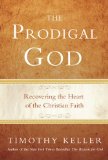
Prodigal has come to mean, in the Christian vernacular, a reprobate wretch. The word more accurately describes wasteful spending, or even just someone who is free with money. Tim Keller, following Spurgeon’s example, uses the term to refer to God — God as incredibly free with His grace and love. God is our prodigal God, in this sense.

Keller has authored a book with that title, and it is to be published by a secular publishing house. I hope the title grabs people’s attention and gets more to take a look at his book.

The book focuses on the story of the Prodigal son, and in the introduction Keller points out a sermon by Edmund Clowney as being very influential in his Christian life, and a formative influence for the book. Crossway has kindly made the print version of that sermon available online for free (as a pdf) [HT: Justin Taylor]. It comes from Crossway’s book entitled Preaching Christ from All of Scripture by Clowney. I really enjoyed the sermon when I read it from my copy of the book a couple years back, so I wanted to be sure to link to the online version of the sermon. Here is the conclusion of the sermon, but I encourage you to read the whole thing, its a quick and easy, yet spiritually moving read.

Come home to the Father’s love, to the joy of Jesus’ feast. Are
you a prodigal, far from the gate of heaven? Jesus now comes to lift
you up. Are you a smug Pharisee, flaunting the filthy rags of your selfrighteousness
outside the Father’s house? Hear the words of Jesus:
his Father calls you to repent and come home as a little child. Or are
you somehow both at once: prodigal and proud, debased but despising?
No matter; cast all away and hold fast to Jesus.

Or are you a believer? Has Jesus found you like the lost sheep and
borne you home on his shoulder? Then consider the demand this
parable puts on you. You have tasted of heaven’s grace. You know the
embrace of your Father’s love. You know that he rejoices over you
with singing. What does heaven’s joy, his joy, over lost sinners mean
to you?

You say, “It means that I, too, must welcome sinners, be ready to
eat with them, even as I have been brought to his table.” Is that
enough? The true Son, who knows his Father’s heart, did not simply
share with sinners his robe, his ring, his sandals. He went to find
them to bring them home. Where will you look today?

“Whoever does not love does not know God, because God is
love” (1 John 4:8, NIV).

Music Mondays: “We Will Dance” by David Ruis

Music Monday posts highlight the music which touched my heart on Sunday. I pray the message of these songs will help us all to live in the spirit of Worship all week long.

I know it’s not Monday, but the sickness around here (3 of us have strep throat) pushed this post out a day.   This song has a Jewish sound to it and an expectant hopeful focus on Heaven.   It becomes an avenue of expressing joy to our Lord and Savior.   I hope the message of the song blesses you all today.

We Will Dance
by David Ruis

Sing a song of celebration
Lift up a shout of praise
For the Bridegroom will come
The glorious one
And oh, we will look on his face
We’ll go to a much better place

Dance with all your might
Lift up your hands and clap for joy
The time’s drawing near
When He will appear
And oh, we will stand by His side
A strong, pure, spotless bride

Chorus:
We will dance on the streets that are golden
The glorious bride and the great Son of man
From every tongue and tribe and nation
Will join in the song of the lamb

Tag:
Sing aloud for the time of rejoicing is near (women echo)
The risen King, our groom is soon to appear (women echo)
The wedding feast to come is now near at hand (women echo).
Lift up your voice, proclaim the coming Lamb (women echo)

 © 1992 Mercy/Vineyard Publishing

To listen to this song, try this you-tube video clip or search for it on Rhapsody.com.   Here is a free guitar chord sheet with the words.

Other great songs we sang Sunday were:

Christless Christianity

When I came across Alex Chediak’s post on Michael Horton’s new book: Christless Christianity, I had to wonder if this is not primarily to blame for Ray Boltz’s fall. In so many ways, American Christianity has become a man-centered mess. I started (not sure if I totally finished it) a series on this issue in the past, you can find my last post here (which links to all the posts in the series).

Look to my Vodpod widget on my sidebar and watch the 5 minute video clip of Horton explaining why he thinks American Christianity has become Christless. This is a book that’s now at the top of my wish list!