Entering the sanctuary, I hear the musical prelude and realize I have made it on time. Soon the music leader starts off with a congregational song and the worship service has officially begun. I pop a mint in my mouth as I listen to the pastor welcome us to the service today before he gives a few announcements and prays. I stand again, as we sing a few more songs, pausing only to read a portion of Scripture together. Several men walk up to the front with baskets, while someone prays and the offering begins. The nice music in the background makes me almost forget that this offering is a part of our worship to God. We sing again, this time as we remain seated. And then a wonderful trio of ladies present us with a special number. Then the pastor steps up and our sermon begins. The message is moving, I must admit, although I wonder about that fellow over there who is practically snoring–oh, and then those people that keep getting up and taking their children out and then returning again. Before I know it the sermon has finished and we are praying. We rise and sing a few verses of a closing hymn and after a brief prayer or benediction we are dismissed.
This is the cycle repeated week in and week out every Sunday morning at numerous churches all over the world. It is carefully planned out and programmed. There is a bulletin with the order of service in it. Everyone who has a part up front has been notified well in advance. The songs have been selected, those praying have thought through what they will say. The pastor has prepared his fine sermon. Everything is in accord with the admonition in 1 Cor. 14:40, “all things should be done decently and in order”.
In some cases this same cycle is repeated at a Sunday night gathering. There may be a bit less formality than the morning worship, and perhaps a different pastor or church leader is speaking, but all in all it is the same. At the mid week service, there may be a time of concerted prayer before or after the service, but the service once again is largely a mirror image of Sunday morning’s routine.
Have you ever wondered if this kind of service was what the New Testament really had in view? Is this formal gathering with one man leading the show and another doing all the talking really what Hebrews has in mind when it exhorts us to not be “forsaking the assembling of ourselves together” (KJV, 10:25)? Or how about this question: Do we actually see this kind of a meeting in Scripture?
Far too often, I fear, we Christians, and especially we theologically conservative Baptists, resist asking such questions. Much more than we want to admit it, we are creatures of habit and upholders of tradition. Tradition is not all bad, in fact it can be very healthy. But if we find ourselves appalled that someone would even dare to question something as important as a programmed worship service where one man preaches the word to all gathered, perhaps a word of caution is in view. Just maybe, we are more connected to our tradition than to Scripture, and probably tradition is holding too prominent a place in our thinking.
In this article, I argue that an open, participatory style of worship is closer to what we see in Scripture than the modern programmed service. Then I give some descriptive examples as to how this might look, and finally I propose some recommendations (not without a few reservations) on how to implement this in a typical church. I understand this is controversial and radical to say the least. But I hope you hear me out and pause to think through some of the considerations I bring forth. May God bless us all in thinking through these matters together, and help us to live out church life in a way that is honoring to Him.
Arguments for Open, Participatory Worship
1) Church Services in Scripture
We do not have many examples in Scripture of believers meeting for worship and edification, but those we do have are examples of an open, participatory style of worship. The clearest example of public worship in Scripture, indeed also the most direct teaching on public worship, is found in 1 Cor. 14. The most pertinent section to our study is verses 26-33.
26 What then, brothers? When you come together, each one has a hymn, a lesson, a revelation, a tongue, or an interpretation. Let all things be done for building up. 27 If any speak in a tongue, let there be only two or at most three, and each in turn, and let someone interpret. 28 But if there is no one to interpret, let each of them keep silent in church and speak to himself and to God. 29 Let two or three prophets speak, and let the others weigh what is said. 30 If a revelation is made to another sitting there, let the first be silent. 31 For you can all prophesy one by one, so that all may learn and all be encouraged, 32 and the spirits of prophets are subject to prophets. 33 For God is not a God of confusion but of peace. (ESV)
Verse 26 specifies that “each one” of the brothers are participating in the service. Two or three are allowed to speak in a tongue while another interprets. And two or three prophets may speak, while the other prophets weigh what is being said. Vs. 30 highlights the spontanaity of the service by stressing that if someone receives a message from the Spirit he may interrupt another’s message (from the same Spirit). Vs. 31 is key: “For you can all prophesy one by one, so that all may learn and all be encouraged”. Today that verse would be rendered, “For one may prophesy so that everyone else can learn from him and be encouraged.”
Now some will argue here about my use of this passage. It seems that many would prefer to not have 1 Cor. 14 in the Bible, so little do they actually listen to what it says. Many will object that prophecy is in view and since prophecy is no longer current in the church today, we do not follow the teaching of the passage. I have actually heard people try to equate NT prophecy and preaching as almost synonymous. If so, the passage should be followed. Many today teach that NT prophecy is similar to sharing something God laid on your heart. Others obviously believe prophecy (albeit of a less authoritative nature than Scripture) is a revelation from God the Spirit for us to hear today. These all should apply the passage, still. And those who think it is referring to a prophecy no longer functioning should realize he is singling out encouragement and edification as the result of prophecy (see v. 3) and any speech today which would encourage or edify–an exhortation, if you will–would fit the bill and fall under the directions of this passage.
Others will point out that Corinth was a confused church and Paul is correcting problems here. Exactly, what you read in vs. 26-33 is Paul’s correction. It applies to us in that this is how Paul says churches should behave. As Steve Atkerson points out, “The inspired correction was for the church to have regulated, orderly interaction, and not a prohibition of it….” [1].
Other glimpses in Scripture at how church services were conducted also show us that the worship was interactive and participatory rather than heavily programmed and conducted as a one man show. Acts 15 shows us a church meeting [while vs. 6 specifies apostles and elders were considering the matter of discussion, vs. 12 and 22 suggest the entire church was together for this discussion] where Peter, Barnabus, Paul, and James all participated. In fact, vs. 7 says “after there had been much debate”. And vs. 12 which follows on the heels of Peter’s appeal, begins “And all the assembly fell silent, and they listened to Barnabus and Paul…”. This suggests that there had been an open forum of discussion and Peter brought forth an appeal and then Barnabus and Paul spoke up, followed by James after the crowd had finished talking (v. 13). Now I know this was a business meeting more than a worship meeting, but it is instructive that one man didn’t run the show.
But what about Acts 1? It seems that Peter is the only one conducting a business meeting of sorts. Well, actually, vs. 14 specifies that everyone was in one accord together in prayer. And then vs. 15 says “In those days Peter stood up among the brothers…”. In the context of this gathering where many are praying, Peter stands and addresses everyone. Then everyone (or at least the apostles) together chose two men (v. 23) and cast lots over them (v. 26). It again was no one man show, but there was a mutual involvement in leadership.
You may be scratching your head trying to come up with some other example of a church meeting in Scripture. Well, don’t forget Acts 20:7-12. And yes, this seems like a contradiction to all I have said, but upon closer look it is not at all. Here we find Paul meeting with the believers in Troas and talking with them, around a meal which seems to be also an observance of the Lord’s Supper. Now this at first glance might seem to be an argument against the position I am advocating. The ESV says “Paul talked with them…and prolonged his speech until midnight…” (from v. 7). Now I admit that many modern Bible translations are similar here, but I believe the Darby version and the NIV best capture what the Greek is actually saying.
Darby — And the first day of the week, we being assembled to break bread, Paul discoursed to them, about to depart on the morrow. And he prolonged the discourse till midnight.
NIV — On the first day of the week we came together to break bread. Paul spoke to the people and, because he intended to leave the next day, kept on talking until midnight.
The greek for “discourse” or “talk” (the KJV has “preach”) is the word “dialogemai“. This is the word from which we get “dialogue”. Vine’s Expository Dictionary says the following here: “…primarily denotes ‘to ponder, resolve in one’s mind’ (dia, ‘through,’ lego, ‘to say’); then, ‘to converse, dispute, discuss, discourse with;’ most frequently, ‘to reason or dispute with.’…The AV translates it ‘preached,’ in Acts 20:7,9; this the RV corrects to ‘discoursed,’ lit., ‘dialogue,’ i.e., not by way of a sermon, but by a ‘discourse’ of a more conversational character.”[2] This understanding of dialogemai fits with what we see later in this passage. Vs. 11 mentions that after Eutychus was raised from the dead, they go back up to the room and eat and “converse” until daybreak. The Greek word for “converse” is homileo. Vine says of this verse: “‘to be in company with, consort with’ (homilos, ‘a throng;’ homilia, ‘a company’), hence, ‘to converse with,’ is rendered ‘to talk with,’ Acts 20:11” [3].
Now the word homileo brings up an interesting point. This word sounds like “homily” another word for a sermon. And the word “discourse” a good translation of dialogemai also can have a formal or religious sense to it. Yet when one looks in the dictionary, the formal sense of discourse is not the first sense for “discourse”, rather the idea of communication, expression, or conversation is primary. [4]
So in Acts 20, we see Paul earnestly desiring fellowship with believers before he likely will never see them again. Paul converses and dialogues, discussing the Word and other things in an edifying way to the believers present for the worship service.
Before I move on form this point about church services in Scripture, we should note two passages which expressly instruct how we are to behave as a body of Christ. Most would view them as directly informing our public worship. Let me quote the verses here.
Col. 3:16 “Let the word of Christ dwell in you richly, teaching and admonishing one another in all wisdom, singing psalms and hymns and spiritual songs, with thankfulness in your hearts to God.” (ESV)
Eph. 5:19 “Addressing one another in psalms and hymns and spiritual songs, singing and making melody to the Lord with all your heart,” (ESV)
Did you catch the “one another”? We are to be teaching and admonishing, verbally and in song, one another. This seems to be most easily accomplished in a setting where people can bring a hymn or a teaching or exhortation (prophecy) publicly before the gathered body and share it with us all. Just think, how can the believers in the pew really teach, admonish, address, or edify the church as a whole? More on that aspect later.
2) Preaching and Teaching in Scripture
“But what about the emphasis Scripture places on preaching?” I can almost hear someone thinking that right now. Well, let me tell you that most often preaching is tied to the public declaration of the gospel message. And most, if not all, of the examples in Scripture we have of preaching (think Acts) are all in contexts describing an evangelistic message to a group of mostly lost people. Teaching, however is what we see happening in the church. The believers in Acts 2 continued in the Apostle’s teaching. Doctrine is a fancy word for teaching. And teaching is stressed as something which should be a part of church life. When Paul sums up his ministry of one and a half years to the Corinthian believers, he does not say he preached to them all that time, but rather that he was “teaching the word of God among them” (Acts 18:11).
Teaching, it is true, conjures up an image of a less formal structure than that of preaching. But still the idea is that one guy is doing it all. At this point let me provide a somewhat lengthy, but I trust helpful quote from John Zens.
Among the many gifts Christ gives to his people, some are gifted as teachers (Eph. 4:11). James says, “Not many of you should presume to be teachers, my brothers, because you know that we who teach will be judged more strictly” (3:1). Paul says, “if a person’s gift is teaching, let him teach” (Ro. 12:6-7). And in 1 Co. 12:28-29 Paul underscores the fact that Christ never intended for everybody to have the same gifting by asking, “Are all teachers?” On the other hand, the writer to the Hebrews chides all the bretheren for their lack of growth by saying, “though by this time you ought to be teachers, you need someone to teach you the elementary truths of God’s word all over again” (5:12). So while it is clear that only some are gifted as teachers, all of Christ’s people are to be “teachers” in the broad sense of contributing to the overall edification of the body according to their gifting….groups of believers will vary greatly in their giftedness…some assemblies will have several gifted at teaching, some will have one person, and others may feel that they have none. The central thing to keep in mind is that all believers have the Holy Spirit (the “anointing”) and are capable of some level of sharing Christ, of manifesting discernment, of caring for one another, and of understanding the Scriptures…. [5]
A further point could be made about James 3:1, I believe. James does not make being an elder a requirement to becoming a teacher. He seems rather to be resisting the influx of people willing and apparently able to teach. Steve Atkerson says concerning this verse, “James’ warning makes sense in light of the intimate, interactive meetings that characterized the early church.” [6]
Now I do believe that pastors and elders (remember I believe in a plurality of elders, see Titus 1:5 and Acts 14:23) have a special responsibility to be pastor-teachers (Eph. 4:11) and to equip the saints through teaching (Eph. 4:12). And I will mention later that I believe there still should be public teaching including a lecture style format. More on that later. But for now notice Titus 1:9-11. Pastors must be able to teach so they can silence those who “contradict”. Those in view here are false teachers. They are speaking in these churches due to the open and participatory format. Thus they need to be silenced. Verse 11 is intriguing. The ESV says, “They must be silenced, since they are upsetting whole families by teaching for shameful gain what they ought not to teach.” But the Greek has “whole houses” not families. I think this is a reference to house churches being led astray by the influence of these false teachers “of the circumcision party”. This is similar to what is in view in 2 John 10, where house could be understood as local assembly, most of which met in houses originally.
3) Church Life in Scripture
One last and important line of reasoning which supports a participatory worship style are the many “one another” commands in Scripture. The Bible is replete with exhortations for us to love, encourage, comfort, edify, and exhort one another. In a previous post on this issue (“1 Thessalonians and Churches’ Greatest Need”), I listed 27 passages of Scripture besides almost the entire book of 1 Thessalonians which give “one another” commands. And my list is by no means exhaustive.
Now how exactly are we to obey these commands? Does sitting in a pew provide you the means of exhorting and encouraging fellow believers? Perhaps every third month when you get a chance to pray publicly, but certainly not regularly. Now, I am sure the commands mentioned above are to be followed out as we interact within the community of believers in our local church. But think about how your church is structured. How exactly are these commands being obeyed? While I agree that I and you and we all must be more assertive in looking for ways to practice “one another” ministry, I think, however, that part of the blame for a lack of “one another” ministry should lie at the feet of how we structure church today. With a select few doing all the practical ministry, the rest of us merely veg being the wonderful consumers that we are.
When you look at Scripture, you do certainly see specific qualifications and responsibilites required of the elders. But it is most often the normal church members who are addressed and called to serve and work in the church. Just typing the phrase “normal church member” irritates me. That entire idea stems from the whole Catholic idea of a distinction between the clergy and the laity. The clergy must mediate the spiritual blessings to the laity. I think the whole Protestant view of preaching is tied up in this concept of clergy and laity held over from the Catholic church. When we look at church life in Scripture we see no special prominence given to the church leaders, and we see non leaders actively involved in every facet of ministry and worship within the church.
We have come to the end of part one. I still plan to describe open, participatory worship (giving modern and historical examples) and offer some final recommendations and reservations about this whole discussion. I wanted to go ahead and post what I have so far here. And the rest should follow shortly.
∞∞∞∞∞∞∞∞∞∞∞∞
Further Resources
[1] Steve Atkerson, “Interactive Meetings”, an online article (similar to the chapter 3 in Ekklesia—see footnotes).
[2] Beresford Job and Jon Zens, “Paul Preached Unto Them”, an online article (similar to chapter 4 in Ekklesia).
[3] The New Testament Restoration Foundation, a ministry devoted to spreading and teaching about house churches with participatory, open worship.
[4] More to come in part 2.
Footnotes
[1] Steve Atkerson, Ekklesia: To the Roots of Biblical Church Life, edited by Steve Atkerson, (Atlanta: New Testament Restoration Foundation, 2003), pg. 37. [For sample of a chapter in this book, click here.]
[2] Vine’s Expository Dictionary entry for “discourse” as accessed at BlueLetterBible.Org, click herefor the online entry.
[3] Vine’s Expository Dictionary entry for “talk – B-3” as accessed at BlueLetterBible.Org, click herefor the online entry.
[4] Information gathered from the Dictionary.Com entry for “discourse” as accessed at Dictionary.Com, click here to view the whole entry.
The Dictionary.Com dictionary’s first two definitions for “discourse” are as follows: “1. communication of thought by words; talk; conversation: earnest and intelligent discourse. 2. a formal discussion of a subject in speech or writing, as a dissertation, treatise, sermon, etc.” And The American Heritage Dictionary‘s first three definitions for “discourse”, cited at Dictionary.com are as follows: “1. Verbal expression in speech or writing. 2. Verbal exchange; conversation. 3. A formal, lengthy discussion of a subject, either written or spoken.”
[5] John Zens, Ekklesia, pg. 59-60; underlined emphasis is italic in original.
[6] Steve Atkerson, Ekklesia, pg. 42.
∼striving for the unity of the faith for the glory of God∼ Eph. 4:3,13 “¢ Rom. 15:5-7


 I am beginning a new series of posts here about music. I will probably continue to post occasionally on great modern worship songs we are singing at church, but this series will focus on the songs I am listening to throughout the week.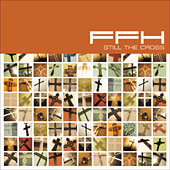
 Still The Cross by FFH
 How do you like your garbage? Because that is what you are getting here at Fundamentally Reformed. Let me tell you! Garbage, garbage, and more garbage—it’s all garbage around here. It might look pretty, but its really rotten—and definitely ugly.
 This is a rare political post for me. But I thought the concise sentiments of Norbert Vollertsen, a German doctor and human-rights activist who has worked in North Korea, quoted in the cover article of