Cast Your Vote for Wholesome Entertainment

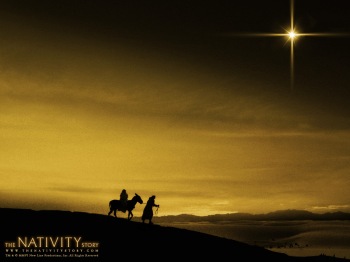
The Nativity StoryI am planning on going to a movie theater for only the second time ever. I blogged about my first visit here. And once again, I go because I want to support wholesome entertainment.

No longer an extreme fundamentalist (IFBx), I see nothing morally wrong with going to a theater to see a movie. You can see the post I linked to above for a defense of this position, or you may be interested in my post on 1 Thess. 5:22—either way, that whole argument is not really the point of this post.

What I am trying to do with this post is encourage you all to get out and support The Nativity Story. It is the first time in dozens of years that a major Hollywood film studio has produced a Bible-themed movie. Hollywood, which is so often maligned by Christians (and rightly so), has actually stuck its neck out and risked by producing this overtly “Scriptural” movie. Shouldn’t we then support the movie so that Hollywood will realize that we Christians want wholesome entertainment, not the all too common base (and at times downright offensive) variety?

The Nativity Story does its best to “stick to the Script”, so to speak. The screenwriter, Mike Rich, took great pains to stick to material that would fit with Matthew and Luke’s accounts, and director Catherine Hardwicke made his dream a reality. Mike spent months researching to understand the time period as well as to understand what Matthew meant when he described Joseph simply as a “just man”.

The movie fills in the gaps of the Scriptural record in an attempt to depict who Joseph and Mary really were. Before you protest, from what I have read, the movie does this in a much more agreeable way than the old classic The Ten Commandments did with the story of Moses. The main message of the nativity story shines through the movie version, and the extra material does not detract from this message, for the most part.

Albert Mohler and World Magazine give the movie great reviews. While David Neff of Christianity Today reminds us that Hollywood does miss the mark, by turning the story into a bit of a love story, rather than highlighting how the actual events that took place point to the prophetic significance of Jesus Christ.

All in all, this seems like a great movie, and I would encourage you to go see it. Take a few bucks and cast a vote for wholesome entertainment. You can be salt and light to the world even while you are enjoying a great holiday movie that will cause you to dwell on the true meaning of the season rather than (merely) thinking of Clarence’s wings.


∼striving for the unity of the faith for the glory of God∼ Eph. 4:3,13 • Rom. 15:5-7

You NEVER Outgrow Your Need for the Gospel

I would highly recommend that you listen to my pastor’s (John Piper) recent sermon “God Strengthens Us by the Gospel”. You can read it here, as well as find links to watch or listen to it online or even to download it.  

The text for the message is Rom. 16:25-27.

Now to him who is able to strengthen you according to my gospel and the preaching of Jesus Christ, according to the revelation of the mystery that was kept secret for long ages but has now been disclosed and through the prophetic writings has been made known to all nations, according to the command of the eternal God, to bring about the obedience of faith”” to the only wise God be glory forevermore through Jesus Christ! Amen.

Piper sees the main point of this passage being that God strengthens us according to the gospel. And the gospel was given according to preaching and revelation of the mystery through  prophetic  writings, and was given according to the command of God, and the gospel was given to bring obedience of faith.    

Piper saw something  incredibly striking in all of this. The passage ends  Romans and is a typical doxology. That means that something about God is  said to be glorious and worthy of praise. The thing  (of all  of God’s attributes  or actions) that  Paul chose to stress at the end of arguably the greatest letter ever written, is that God strengthens us through the Gospel. Piper saw this as stating something great about God. Other dictators and kings become great by walking on the backs of those they govern. They glory in being stronger than others and in holding them down.

But God is so much greater  than that. He glorifies Himself by strengthening those whom He governs. He is big enough that He does not have to fear competition and advance His cause by humbling his own subjects. God strengthens His people, and that indeed is glorious, and an amazing grace we are so unworthy of!

Then Piper makes the obvious point, that Paul considers the gospel to be central to life as a Christian. It is not merely a “ticket to Heaven”, that once acquired you can drop in your pocket and forget about. No it is much more than that. Piper said,

You never, never, never outgrow your need for this gospel. You don’t begin the Christian life with this and then leave it behind and get stronger with something else. God strengthens us with the gospel to the day we die.

If you listen to the sermon, you will see that Piper adds about four or five more “never”s in that statement: “You never, never, never, never, never, never, never, NEVER, outgrow your need for this gospel.” The gospel is to fuel our worship and be ever in front of us as we come to God for acceptance. All of our works should flow from the gospel, and not be separate from its impact. This is the heart of gospel-centeredness. The gospel is what strengthens us. (Take the time to look up Acts 20:32 in this regard.)

Finally, I want to encourage you to follow this series. There are four more messages on this paragraph. One of them, I am sure, will delve into the fact that now the mystery of Christ is revealed in the prophetic Scriptures (the OT, as far as I can tell). That part, to me, is a justification for the redemptive historical hermeneutical approach to Scripture. But that is for another post.

(P.S. I wanted to beat John Chitty to posting on this sermon! I am sure that he will have a post on it soon, as “gospel centeredness” is the main theme of his blog.)

Painfully Obvious

Elephant at 6 months in the womb (1/4 of the way through its gestational period)

Technological advances have made striking pictures like this (an elephant embryo six months along in its 24 month gestational period) possible. This post (HT: Ryan DeBarr) contains several striking pictures of animal embryos. What is crystal clear is that they are not developing through several stages of evolution in the womb—and they are not mere lumps of tissue.

And of course we now know for certain that the same is true with human embryos. 3D ultrasound technology has completely destroyed the myth of a gestational evolution of sorts. But guess what? Textbooks continue to repeat the Darwinian myth that human embryos have gill slits and etc. And pro abortion people continue to denigrate human embryos as “just tissue”.

How very sad. And, how painfully obvious.


Abort73.com | We Dare You to Know


∼striving for the unity of the faith for the glory of God∼ Eph. 4:3,13 “¢ Rom. 15:5-7

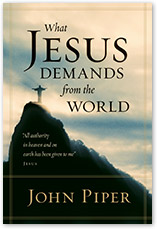
Jesus’ Demands — Abide in Me (#7)

Click to orderDemand #7 — Abide in Me

Abide in me, and I in you. As the branch cannot bear fruit by itself, unless it abides in the vine, neither can you, unless you abide in me. I am the vine; you are the branches. Whoever abides in me and I in him, he it is that bears much fruit, for apart from me you can do nothing. (John 15:4-5)

As the Father has loved me, so have I loved you. Abide in my love. (John 15:9)

If you abide in my word, you are truly my disciples, and you will know the truth, and the truth will set you free. (John 14:11)

Jesus said to the Jews who had believed in him, “If you abide in my word, you are truly my disciples, and you will know the truth, and the truth will set you free.” (John 8:31)

What abiding is.

To abide, is to stay, continue, or dwell. So Piper says, “Jesus meant: ‘Stay in me. Continue in me. Keep me for your dwelling.'” With the figure of the vine, we understand a little better what “abiding” is. Piper says it best: “Abiding in Jesus means staying vitally connected to the life-giving, power-giving, fruit-producing branch, namely, Jesus.”

What abiding produces.

Piper claims abiding is the “moment-by-moment cause of every good thing in our lives”. Of course, he gets this from Jesus’ statement “Apart from me you can do nothing”. So in John 15, abiding in Jesus results in fruit. No fruit without abiding. So Piper again states that abiding means “staying vitally connected, hour by hour, to the one who alone produces in our lives everything he demands.”

What abiding isn’t.

Abiding produces fruit, so abiding cannot be that very fruit. It is wrong to think we are obeying Christ’s demand to abide if we are just “bearing fruit” or “keeping Jesus’ commandments”. That is the fruit of abiding. Maybe we don’t have abiding quite pigeonholed yet. So…

How do we abide?

Jesus says abide “in me” (Jn. 15:4) and “in my love” (Jn. 15:9). He also says to abide “in my word” (Jn. 14:11). All of this points toward “abiding as continual trust in the truth of Jesus’ words and in the certainty of his love.” We would not be abiding in Jesus’ love if we stopped beleiving that we are loved by him. We would not be abiding in Jesus’ word, if we ceased believing in the truth of that word. Abiding is a continual trust in Jesus’ love and in His words, in other words, a continual trust in Him as a person.

Piper concludes that “abiding in Jesus—in his love and in his word—is trusting that he really is loving us at every moment and that everything he has revealed about himself and his work for us and our future with him is true.”

A warning.

Jesus’ demand that we abide in Him is a warning. In Jn. 8:30-31 (quoted above), Jesus ties abiding in with being a “true” disciple. In John 15, Jesus speaks of the utter destruction of those who, in the words of Piper, “appear to be truly in the vine, but are not”. All of this is to warn us that if we are not abiding, if our lifestyle is one that consistently does not trust in Jesus’ love and in Jesus’ Word continually, then we might very well not be genuinely born again. We may still be on our way to hell.

Such warnings do not prove that we can actually lose our salvation. 1 Jn. 2:19 teaches that those who fall away were never truly saved, they just seemed to be. These warnings should also not cause us to try to earn our salvation by working real hard. No, they are what God uses to prod us onward along that straight and narrow way—the hard way. At times we will need to be warned that our lifestyle is not matching our profession. And they ultimately remind us that it is only God’s free grace given to us because of Jesus Christ’s perfect life, death, and resurrection, that gives us a secure place in heaven. The very warnings to continue believing will help us believe and call us to find refuge in Jesus Christ through ongoing faith and trust. [See this post for more on this point.]

Encouragement.

Piper stresses that ultimately we cannot “abide” on our own. God keeps us in the vine. He does not let us slip through His hand (Jn. 10:27-29). Jesus prays for us and sovereignly determines that our faith will not fail (cf. Luke 22:31-32).

So with all this in mind, let us purpose to abide, moment by moment, in a vibrant trust in Jesus—His love and His Word. Let us seek to put His Word in front of our eyes, so that reading it faithfully, we will be nourished and abide in the vine. Let us use the means of grace in our lives and take advantage of our church and our relationships with other believers, so that we keep on keeping on. Let us press on to higher ground!

—See all posts on, the Demands of Jesus


∼striving for the unity of the faith for the glory of God∼ Eph. 4:3,13 “¢ Rom. 15:5-7

Bobspotted Blogroll: November 26, 2006

Dramatic Scripture Recitation

  • This is really good. Hebrews 9 and 10 are quoted in a dramatic fashion. It really brings home the glorious message of the Gospel so central to that passage, and indeed all of Scripture. The video clip is long (11 min.), but if you are able, it is well worth watching.

On the “A B C”s of Fundamentalism

  • I earlier mentioned Joel Tetreau’s posts at Sharper Iron regarding his classification of fundamentalism. So I thought I should point you to a good simplification of Joel’s system by Michael Riley of Nescio Latinitatem.
  • Joel’s articles were not well received generally at Sharper Iron. While at times Joel may have been using a wide brush, he painted some stark realities in fundamentalism. Such ugliness is better left under the carpet it seems. Seriously, I thought his criticisms were valid, but not as precisely stated as possible. For the record, I pretty much agree with his taxonomy, but it is inadequate. Maybe I’ll try to come up with my own, someday.

More on Fundamentalism

  • Ryan DeBarr gives a thoughtful post on the occasion of people connected to Emmanuel Baptist Theological Seminary (a notable KJV/TR only school) calling for a separation from fundamentalism (from Sharper Iron varieties as well as from Hylesism). Ryan agrees with some of their criticisms of fundamentalism, but points out some errors in their own approach. It is interesting reading for those interested in fundamentalism.

On Dealing with Differences

On the  Danger of (some) TV Preachers

More on Holy Hip Hop

  • I know I have talked about this topic quite a bit lately (here, and here), but I wanted to just highlight one more link.
  • Justin Taylor highlights another doctrinally sound, gospel exalting, God glorifying Christian hip hop group: CHRISTCENTRIC.

On Christ Centered Preaching