Calling all Critics…

So, are you a critic? Or are you more than a critic. Tom Pryde wrote an excellent piece in which he explores how critics often do noone any  good. They just create a “culture of criticism”. He challenges us to do more than just critique, but to reform and act.

As a “reforming” blogger myself, I admit it is very easy to criticize and very hard to act and reform. It can be fun to argue and easy to ignore or even despise/belittle  opponents, but very hard to build and help people. So I needed this fresh reminder to have a Christian attitude when blogging.

Many of my readers are those who see things that need fixing in fundamentalism. I challenge you to read Tom’s post and pick up a hammer rather than just telling all the foreman what to do. This is a post worth marking well.  

So here is the link to Tom’s post:  “NeoFundamentalist, Remonstrans, and the Culture of Criticism“. And to get you more excited about it, let me post Seeker’s 6 point synthesis of Tom’s post. (You’ll want to read Seeker’s post too as it adds to Tom’s.)

  1. [Don’t assume] an incredulous posture.
  2. Constructive criticism comes alongside,  [destructive criticism]  aims to alienate.
  3. Being critical attracts mostly embittered, critical people.
  4. Be an example and a reformer, not a critic.
  5. How should we handle our critics?
  6. We must have a bias for action, not for criticism.

[words in brackets above  are my slight edits to Seeker’s points]

MacArthur & Company on KJV Onlyism

I’m quite busy today, but let me inform you of an interesting series of articles over at Pulpit, the blog of John MacArthur and company. They are taking on the subject of KJV onlyism, because (surprise, surprise!) some people have been bringing up the issue in the comments sections over on their blog. So they have begun “A Short KJV Detour”. See below for the links. Their interaction with KJV onlyism is more informed than most conservative evangelicals, as fundamentalists tend to cross their paths more often. These articles are informative yet simple—they will be helpful to many who are somewhat unfamiliar with this issue, so dive in!  

Part 1

Part 2

Part 3

Part 4

Thinking God's Thoughts on Abortion

I don’t know about you, but I am a human. And as such, it is easy to think like a human. Thus, I can easily empathize with the plight of people facing unwanted pregnancies. I can even come close to recognizing the right of people who don’t know Jesus and don’t revere the Bible, to follow their own conscience and go ahead and abort their baby. I mean, I don’t expect them to face jail time if they lie or if they think lustful thoughts. I don’t expect to enforce kindness and love as a moral duty on all citizens. I believe the Bible wants us to persuade and not force everyone to follow Christ. And again, I’m human and can understand the excuses and reasons a natural person would have for such an action.

So part of me always flinches when the thought of overturning Roe v. Wade comes up. Why should we have to make all abortions absolutely illegal?

But the Bible calls us, as Christians, to be people who think God’s thoughts. We need to be informed by God’s Word in every area of life. And as Isaiah 55 says: “[God’s] thoughts are not [our] thoughts” and His “ways [are] higher than [our] ways” (vs. 8-9).

So what are God’s thoughts about abortion? Any pro-choice people reading this are now ready to come up with a flurry of alternative interpretations of any passage I’ll bring up, assuming they are people who at least want to be seen as caring about the Bible and what God says.

Okay now that everyone’s ready, let me try to throw a wrench in the works. Follow this line of reasoning:

People agree murder is wrong for this reason: it violates the murdered person’s rights (their right to be alive as a person). But with abortion, some people will claim a fetus is not a person and hence has no rights.

God, however, does not see murder as wrong for those merely human reasons. He says murder is wrong because it is an affront to God. Murder destroys a creature that God made in his image. Gen. 1: 27 and 9: 5-6 (and many other verses) teach that God created human beings as the sole creatures in this world that reflect God’s image. And since God defines a human being as being alive and personal from conception, then the destruction of unborn fetuses is still an affront on God’s image and God’s personhood. Further, God is the one who is ultimately the one behind the miracle of life, every conception occurs because of His personal work. Destroying the fetus God made is an affront to God.

And again, because God wrote the Bible and it is His Word, then God himself is revealing that the taking of human life (defined by God in his Word to be from the point of conception) is an affront to God’s character and an offense to Him. Thus, the debate is more than just a squabble over the definition of life and when it begins. Abortion is an offense to God.

Now you might have difficulty following me here. But consider this: God is the one who has made people with disabilities to be a part of our world. He is the one who allows Down Syndrome children to be born, for instance. So if man says such children should not be made to endure a difficult life, or the parents of such children should not have to endure all the suffering involved, man is raising himself up and saying, “God you don’t know what you’re doing. Let us fix things here…”. And in fact, that is what’s happening today. Check out this sobering piece by Albert Mohler (HT: Thirsty Theologian) linking to a Newsweek column on the tragedy of a concentrated effort to wipe out all such disabled children.

This article is written on the 34th anniversary of the Roe v. Wade decision. And my line of thought above was started in part by this 2nd part of a series on the subject by my blogging friend Ken Fields. (See also part one and stay tuned for part three). If you are interested in more posts on this subject, check out this post and this one by Justin Taylor. Or check out Abort73.Com.

Like Hearts

Just a quick post here. This week in an exchange of emails with one of my readers, a phrase was brought up that has stuck with me. The gentleman mentioned that so many people strive for “like-mindedness” but what is most important is “like-heartedness“.
I tend to agree. Certainly if we are like-minded we can have more cooperation and greater fellowship, with each other. But there are many issues about which we will never be totally like-minded with anyone! But we can be like-hearted.

We can agree to hold to different positions on lesser issues and yet still acknowledge that we share a similar heartbeat. And if our hearts are pointed in the same direction, we should be able to have meaningful fellowship, even if our heads get in the way at times.

Since starting this blog, I have encountered many different people. And I have found that even when I differ with some on mind-issues, I can appreciate that their heart is pointed in the right direction. Early on I found that I needed to tone down my posts and acknowledge that there are many fundamentalists who are like-hearted with me. And many from even the more “hyper” circles have right hearts.

Scripture asks us and demands us to maintain the unity of the Spirit with fellow believers. We should yearn for such unity and look for the good hearts in people, even when our minds might be contradictory. Hopefully as fellowship continues a greater like-mindedness will develop. But ultimately it isn’t important if you agree with me, or if I approve of your distinct positions on any number of issues. What matters is that God approves of our hearts, and that we don’t disown and malign fellow believers.

By all means stand for truth. And defend your positions. (You know I will!) But please listen for the heart of those whom you may be quick to condemn. Let us all  strive for like-heartedness! [Oh, and take a moment and look up the verses supporting my motto  in the top right sidebar]

Believer’s Baptism and the Debate

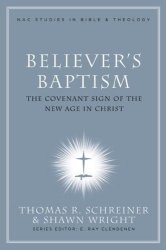
Sign of the New Covenant in Christ, Click to orderRemember that debate we had around here on infant baptism vs. believer’s baptism? It was in Nov. and Dec. of 2005. (See this summary post on the debate.) Well there is a new book out which may prove helpful to anyone seriously considering the issue.

For most of my life I have just assumed believer’s baptism was correct, but when I began to seriously think and debate on the issue, I came to understand that the issue is not as hard and fast as I once thought. Part of this stems from my new understanding of Calvinism and Reformed doctrine. I am now much more open to the Reformed doctrine of infant baptism (which is not at all a baptismal regeneration view), but I remain Baptist still. However, I have determined I need to do more research in this area, and this book looks like it should be one I study.

There is an interesting interview of Tom Schreiner, one of the editors, on Justin Taylor’s blog which is worth reading if you are conversant with the debate (the comments are interesting as well). It also links to an interesting article written by Bob Stein on the subject as well.

I am going to list the chapters and contributors from the book below. Feel free to provide any feedback on the debate in general or this book in particular.

Author Preface

Foreword
Timothy George

Introduction
Thomas A. Schreiner and Shawn D. Wright

1. Baptism in the Gospels
Andreas J. Köstenberger

2. Baptism in Luke-Acts
Robert H. Stein

3. Baptism in the Epistles: An Initiation Rite for Believers
Thomas R. Schreiner

4. Baptism and the Relationship between the Covenants
Stephen J. Wellum

5. Baptism in the Patristic Writings
Steven A. McKinion

6. “Confessor Baptism” : The Baptismal Doctrine of the Early Anabaptists
Jonathan H. Rainbow

7. Baptism and the Logic of Reformed Paedobaptists
Shawn D. Wright

8. Meredith Kline on Suzerainty, Circumcision, and Baptism
Duane A. Garrett

9. Baptism in the Stone-Campbell Restoration Movement
A. B. Caneday

10. Baptism in the Context of the Local Church
Mark E. Dever [HT: Justin Taylor]