A Divine Perspective on the Church — C.J. Mahaney

Last Sunday, we had the privilege of hearing C.J. Mahaney preach in our church. His text was 1 Cor. 1:1-9 where Paul surprisingly commends the Corinthian church. He’s about to provide some strong correction for their many errors, but he goes out of his way to thank God for them, and ensure they know how blessed they are of God.

The message encourages us to find the evidences of God’s grace in the lives of those around us. It’s so easy to find fault; but when we study the fruits and gifts of the Spirit as revealed in God’s Word, we will see God at work in many ways in the lives of the people in our churches. This point is underscored by 1 Cor. 4:5. There Paul expects that God will give each minister a “commendation”. Not “condemnation” but “commendation”. This is stunning. At the judgment, and because of Christ’s transforming work in us and his substitutionary work for us, God will find things to praise us for. What wonder!

Now, don’t just enjoy my meager summary of the message. It’s available for free download from our church’s website. Click here. To learn more about C.J. Mahaney, click here. You can find other free sermons by Mahaney at this page, or by searching Sovereign Grace Ministries’ resource library. Also a C.J. Mahaney sermon archive is being created here.

May God grant us eyes to see how He is working in our lives today.

And after you have suffered a little while, the God of all grace, who has called you to his eternal glory in Christ, will himself restore, confirm, strengthen, and establish you. To him be the dominion forever and ever. Amen. (1 Pet. 5:10-11)

One last note: I recommend several of Mahaney’s books (a few are listed here). I’ve also reviewed The Cross Centered Life, and Sex, Romance, and the Glory of God.

Football Hall of Famer Art Monk Boasts in the Lord

Recently, Art Monk (along with fellow Washington Redskin Darrell Green) was inducted into the Football Hall of Fame. Instead of boasting in his achievements, however, Art Monk took the opportunity to boast in Jesus. Here is an excerpt from his Hall of Fame induction speech (HT: CJ Mahaney).

…as great as this honor is, it’s not what really defines who I am or the things that I’ve been able to accomplish in my life. …

And even now as a Hall of Famer, the one thing I want to make very clear is that my identity and my security is found in the Lord. And what defines me and my validation comes in having accepted his son Jesus Christ as my personal savior. And what defines me is the Word of God, and it’s the Word of God that will continue to shape and mold me into the person that I know he’s called me to be.

So I’ve learned a long time ago never to put my faith or trust in man, for man will always fail you. Man will always disappoint you. But the Word of God says that Jesus is the same yesterday, today and forever. And He will never fail you.

And that is what I live by and what I stand on….

There’s a scripture that I think about almost every day and I’ve come to personalize it to my life. It says: “Lord, who am I that you are mindful of me?” [Psalm 8:4]. And the Apostle Paul says, “Think of what you were when you were called. Not many were wise by human standards. Not many were influential. Not many were born of noble birth” [1 Corinthians 1:26]. And when I look at my life and how I grew up, I certainly had none of those qualities or benefits.

But I understand and I know that I’m here not by, in, and of my own strength””but it’s by the grace and the power of God upon my life, who I know gave me favor along the way, and who provided opportunity and room for me to use my gifts.

So I am very grateful to receive this honor, and I can stand here before you and say, “Hey, look at me, look at what I did.” But if I’m going to boast, I’m going to boast today in the Lord, for it’s because of him that I’m here and I give him thanks and glory and honor for all that he has done for me.

A pretty good message. And its from a NFL football player! Art Monk was one of the game’s great receivers, but from the looks of it, he also has a great testimony of following Jesus Christ. Check out the full post with more excerpts from the speech, at C.J. Mahaney’s blog.

A New Song for the Nations

My pastor, John Piper, made some interesting comments on the concept of a “new song” in this week’s sermon. He made an important observation of how Ps. 96, which is a missions psalm, is also very much concerned with singing. I was encouraged as he shared how the global church is having a revival of singing to the Lord, in our day.

My fundamentalist ears noticed he used “new song” in its most natural way of referring to a new-in-time song commemorating a new work the Lord has done on our behalf. But that’s beside the point. I’d encourage you to listen to the last 5-10 minutes or so of the sermon here (if not the whole thing). And I’m going to copy the relevant portion of the condensed print version of the sermon below.

…you can’t summon the nations to sing if you are not singing. So let me suggest why in this global missionary context the psalm would stress singing new songs. Notice that these new songs are “to the Lord.” Not just about the Lord. Verse 1: “Sing to the Lord a new song.” It’s not wrong to sing about the Lord. The Psalms do it all the time. But when new songs are being written and composed and sung “to the Lord,” something is happening in the church. It’s a sign of unusual life and vibrancy. People are not just living off the spiritual capital of previous generations, but they are dealing vibrantly with the living God and their songs are being sung to him. He is real. He is personal. He is known. He is precious. He is present. Worship is more intense and more personal and more engaging.

A New Song in Our Day

That is what the psalm calls for, and that is what has been happening during my entire adult life. Around the world there is a new song and a new vibrancy and a new personal engagement in singing to the Lord. And the really astonishing thing in our time is the way this awakening of singing to the Lord with new songs has such a strong global and missionary flavor. To my knowledge singing has never been more at the forefront of missions as it is today.

God is doing something wonderful in the fulfillment of Psalm 96. It is far bigger than any one church, or any one ethnic group, or any one region of the world. The global church is singing””singing to the Lord, singing new songs, and singing about God’s Lordship over the nations.

And I would simply say: Don’t miss what God is doing. Be a part of it. Get the nations on your heart. Think rightly about God’s global purposes. Feel deeply about his marvelous works. Sing with all your heart to the Lord. And be a part of summoning the nations to join you.

The Center of Our Singing

And may the center of our singing be the same as the center of the new song we will sing in the age to come, namely, the song of the Lamb who was slain.

And they sang a new song, saying, “Worthy are you to take the scroll and to open its seals, for you were slain, and by your blood you ransomed people for God from every tribe and language and people and nation, and you have made them a kingdom and priests to our God, and they shall reign on the earth.” (Revelation 5:9–10)

Amen! May the Lord grant a renewed growth to His world-wide church. May more and more nations and people groups be added to the number of those singing praise to the Lamb!

Quotes to Note 3: Luther’s Fear of God

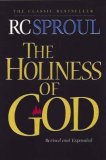
I have one final quote to share from The Holiness of God by R.C. Sproul. I recommend the book as a great God-focused book on what God’s holiness really is and how it should impact us.

Sproul spends some time discussing Martin Luther, and highlights an instance when he was to offer his first Mass. This is before Luther was converted, but it shows how clearly Luther was aware of God’s holiness and the true terror that this holiness should work in man. Luther was unable to give the mass, and could not speak. He was paralyzed when he got to the point when he was supposed to say the words, “We offer unto thee, the living, the true, the eternal God.” Luther explains why this caused him to be speechless in the following few lines. Would we all were so keenly aware of God’s majesty and our sin.

At these words I was utterly stupefied and terror-stricken. I thought to myself, “With what tongue shall I address such majesty, seeing that all men ought to tremble in the presence of even an earthly prince? Who am I, that I should lift up mine eyes or raise my hands to the divine Majesty? The angels surround him. At his nod the earth trembles. And shall I, a miserable litle pygmy, say ‘I want this, I ask for that’? For I am dust and ashes and full of sin and I am speaking to the living, eternal and the true God.” [Holiness of God, pg. 107 (Wheaton: 1985); quote was taken from (Roland Bainton, Here I Stand (NAL, 1978)]

Praise God that we have a mediator, one Jesus Christ to take our place and allow us to approach the great and Mighty God. How truly amazing is God’s grace.

R.C. Sproul on Why Innocent People Suffer

After quoting Luke 13:1-5 in his book The Holiness of God, R.C. Sproul addresses the question “Why do innocent people suffer?” In light of the death of my friend Larry, and of Steven Curtis Chapman’s 5-year-old daughter, I thought perhaps now would be a good time to give an excerpt from this great book I’ve recently finished reading.

…The question is raised, “What about… the innocent people killed by the falling of the tower? Where was God in these events?” The question under discussion was: “How could God allow these things to happen?” The question is actually a thinly veiled accusation. The issue was, as always, how can God allow innocent people to suffer?

We can hear the implied protest in the question. The eighteen innocent people were walking down the street minding their own business. They were not engaged in playing “sidewalk superintendent.” They were not heckling the construction workers. They were not running away after robbing a bank. They just were “there,” at the wrong time and tin the wrong place. They suffered the consequences of a fatal accident.

We might have expected Jesus to explain it like this: “I am very sorry to hear about this tragedy. These things happen and there is not much we can do about it. It was fate. An accident. As good Christians you have to learn to accept the bad with the good. Keep a stiff upper lip. Be good Stoics! I know I taught you that the One who keeps Israel neither slumbers nor sleeps. But that was a poetic statement, a bit of hyperbole. Do you realize what a difficult task it is for My Father to run the universe? It gets tiring. Every now and then He must take a nap. On the afternoon in question He was very weary and grabbed forty winks. While He was nodding the tower fell. I am sorry about that and I will report your grievance to Him. I will ask Him to be a bit more careful in the future.”

Jesus might have said: “I know I told you that My Father notices the landing of every sparrow and that He numbers the hairs on your head. Do you realize how many sparrows there are flying around? And the hairs on the heads! The afternoon the tower fell my Father was busy counting the hairs on the head of a particularly bushy-haired fellow. He was concentrating so hard on the fellow’s head that He overlooked the falling tower. I will suggest that he get His priorities in order and not spend so much time with sparrows and hair.”

That is not what Jesus said. What He said was, “Unless you repent, you too will all perish.” In effect what Jesus was saying was this: “You people are asking the wrong question. you should be asking me, ‘Why didn’t that tower fall on my head?'” Jesus rebuked the people for putting their amazement in the wrong place. In two decades of teaching theology I have had countless students ask me why God doesn’t save everybody. Only once did a student come to me and say, “There is something I just can’t figure out. Why did God redeem me?”

We are not really surprised that God has redeemed us. Somewhere deep inside, in the secret chambers of our hearts we harbor the notion that God owes us His mercy…. What amazes us is justice, not grace….

…We have come to expect God to be merciful. From there the next step is easy: we demand it. When it is not forthcoming, our first response is anger against God, coupled with the protest: “It isn’t fair.” We soon forget that with our first sin we have forfeited all rights to the gift of life. That I am drawing breath this morning is an act of divine mercy. God owes me nothing. I owe Him everything. If He allows a tower to fall on my head this afternoon I cannot claim injustice….

…We must not take His grace for granted. We must never lose our capacity to be amazed by grace…. [The Holiness of God, by R.C. Sproul [Wheaton: Tyndale House, 1985], quoted from pages 159-161, 164, 167]

The excerpt above was not intended to solace or comfort the grieving, but rather to orient all of our minds around a Godly response to such suffering in this world. We should always “weep with those who weep” and extend God’s comfort to those who are sorrowing. But we must never give in to the temptation to blame God or claim he is unloving in what He allows.