Submitting to God’s Will in Marriage — 1 Pet. 3:1-7 (part 2)

This is part 2 of an outline from a lesson I gave for my small group, recently. Read part one first.

Submitting to God’s Will in Marriage (1 Pet. 3:1-7) —
Part 2: The Husband

I realize this is a thorny topic for many. I’d like to recommend a couple resources before I continue here. For much of this lesson, I’m dependent on a chapter from Recovering Biblical Manhood and Womanhood: A Response to Evangelical Feminism (edited by John Piper and Wayne Grudem). Wayne Grudem’s chapter “Wives Like Sarah, and Husbands Who Honor Them” focuses on these seven verses in 1 Peter. Also,a pastor at C.J. Mahaney’s Covenant Life Church, in Gaithersburg, MD has written an extremely helpful book from this complementarian perspective on marriage: Love That Lasts: When Marriage Meets Grace. Gary and Betsy Ricucci (Betsy is C.J.’s sister) have really outdone themselves with that book, you’ll find it very practical. I’d also recommend perusing the Council for Biblical Manhood and Womanhood’s website, where you will find a rich resource with many online articles covering all aspects of this issue, from the practical to the apologetical. Finally, feel free to check out the few posts I have made on these topics (listed here and here).

2. Considerate Leadership — The Husband (1 Pet. 3:7)

A. Definition.

1) Leadership

Because this verse is tacked on to the instructions for how a woman should submit, we can understand it as applying to how a husband leads his wife. he must do so considerately. It should also be noted that 3:1-7 clearly shows that the husband leads, and leadership is not equally shared. Both submission and leadership are not optional. “Husbands cannot rightly opt out of family leadership and become passive non-participants in decisions and activities. Neither can they rightly make the opposite mistake and exercise harsh, selfish, domineering authority in their families….” (Grudem)

2) Considerate Leadership

“In an understanding way” literally is “according to knowledge”. So husbands are to live together with their wives according to knowledge. Exactly what that knowledge is, is not specified. Likely it would include knowledge of God’s Word relating to marriage, and intimate knowledge of his wife (emotionally, physically, spiritually, etc.). Living according to this knowledge means understanding your wife and treating her carefully and lovingly, yet realizing the Biblical call to lead her and the family.

This call to live understandingly with the wife parallels the Biblical emphasis in the commands to husbands as it relates to marriage. Husbands are to love their wives as Christ sacrificially loved the church (Eph. 5:25). They are to love them as their own bodies, love them “as yourself” (Eph. 5:28, 33). Husbands are to love their wives and “not be harsh with them” (Col. 3:19).

B. Rationale for Considerate Leadership.

1) The wife is the “weaker vessel”.

This means, most basically, that she is vulnerable to being taken advantage of. In the context, she has a lesser role (not lesser importance, mind you) with regards to leadership. She is also physically weaker, and she has emotional vulnerabilities (hinted at in vs. 6). Emotional sensitivity is a great strength, but it opens one up to a likelihood of being “hurt deeply by conflict within a marriage or by inconsiderate behavior” (Grudem). Since the wife is vulnerable both in light of her position as under the husband, as well as her physical makeup, such a strong call for husbands to be considerate, and to show honor is needed.

2) The wife is a joint heir with her husband in the faith.

In Christ we are all one, there is no “male or female” even as there is no “Jew or Gentile”. Hence we should live together considerately, and men should treat their wives honorably.

3) This matter is vitally important and affects our prayers.

Prayers are hindered if the husband harshly treats his wife. Prayers are helped if he gives her honor. God cares about our marriages, and maintaining a healthy and godly marriage is very important — it pleases God.

C. Qualities of Considerate Leadership.

1) Consideration and Kindness for the wife. — living with her “in an understanding way”.

2) Honor for the submissive wife.

Husbands should not just be considerate, they must actually go out of their way to bestow honor on the godly and submissive wife. The word for “woman” is used only here in the Bible and refers to the idea of “feminine one” — a woman in tune with her godly femininity. This woman is the one worthy of honor.

3) Prayerful direction of the family.

Vs. 7 makes it seem that husbands should be praying and that prayer if vital for families. We should pray for our families and lead them from our knees.

“God Gave Wine: What the Bible Says about Alcohol” by Kenneth Gentry

Written by one who doesn’t drink due to health concerns, God Gave Wine provides a non-biased approach to the issue. What does the Bible really say about alcoholic drink? Contrary to the popular opinion of many American evangelical Christians, the Bible does not expressly forbid the drinking of alcoholic drinks, such as wine or “strong drink”. Rather, it forbids in no uncertain terms, the abuse of alcohol.

Drunkenness is never viewed as a disease, instead it is incumbent on men not to become drunk with wine. Drunkenness is a sin worthy of eternal damnation. It is expressly forbidden and counseled against. Yet the moderate enjoyment of wine is not only allowed, but encouraged.

Kenneth Gentry deals with each relevant passage exegetically and fairly. He traces the Biblical meanings of the words employed for “wine” and other alcoholic drinks. He reveals the circular reasoning behind the two wine theory, that the Bible has two kinds of wine in view (alcoholic, and non-alcoholic) even as it employs only one term. The same wine the Bible warns can lead to drunkenness, is the wine the Bible praises as a gift from God for man’s enjoyment.

As Christians, we should all care most about what God says on any given issue. Arguments from wisdom and expediency are important, but the express teaching of God’s Word is final. Gentry explores the many arguments from principle that Christians use to avoid completely anything alcoholic. He finds these arguments wanting, after a verse by verse study of Romans 14.

If you care about the truth, and if you care about Scripture, you should pick up this book and read it. The traditions of godly men of old are important, but God’s Word is more so. Historically, the avoidance of all alcoholic drink is relatively new, and today is primarily restricted to American Christians. When you see what Scripture has to say, Itself, on this topic, you will at least have more leniency in your views concerning this important issue.

As one who was converted (through a study of Scripture) to the moderate use of God-given wine, I can testify that many Christians drink with joy to the glory of God. Drinking does not make one more apt to sin, nor does it reveal that one has worldly desires. No matter how you conclude on this topic, it would be to your credit to interact with and at least consider what Kenneth Gentry says in this helpful, carefully written, concise book on wine.

Anyone interested in studying this issue out further, can peruse my previous articles on the subject listed Amazon.com or direct from Oakdown Books.

Atheist No More: Antony Flew

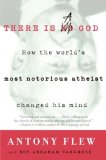
click to learn more about this bookAntony Flew has been one of the world’s most influential atheists. Recently, he published a book explaining how and why he has changed his mind. He now acknowledges God.

For a great review of his book, and explanation of the arguments that eventually conquered Flew’s resistance to theism, check out this superbly written piece by R.C. Sproul: “A Tale of Two Parables” [HT: Justin Taylor]. (For more information on R.C. Sproul, check out Ligonier Ministries’ website.)

Quotes to Note 3: Luther’s Fear of God

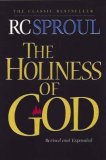
I have one final quote to share from The Holiness of God by R.C. Sproul. I recommend the book as a great God-focused book on what God’s holiness really is and how it should impact us.

Sproul spends some time discussing Martin Luther, and highlights an instance when he was to offer his first Mass. This is before Luther was converted, but it shows how clearly Luther was aware of God’s holiness and the true terror that this holiness should work in man. Luther was unable to give the mass, and could not speak. He was paralyzed when he got to the point when he was supposed to say the words, “We offer unto thee, the living, the true, the eternal God.” Luther explains why this caused him to be speechless in the following few lines. Would we all were so keenly aware of God’s majesty and our sin.

At these words I was utterly stupefied and terror-stricken. I thought to myself, “With what tongue shall I address such majesty, seeing that all men ought to tremble in the presence of even an earthly prince? Who am I, that I should lift up mine eyes or raise my hands to the divine Majesty? The angels surround him. At his nod the earth trembles. And shall I, a miserable litle pygmy, say ‘I want this, I ask for that’? For I am dust and ashes and full of sin and I am speaking to the living, eternal and the true God.” [Holiness of God, pg. 107 (Wheaton: 1985); quote was taken from (Roland Bainton, Here I Stand (NAL, 1978)]

Praise God that we have a mediator, one Jesus Christ to take our place and allow us to approach the great and Mighty God. How truly amazing is God’s grace.

R.C. Sproul on Why Innocent People Suffer

After quoting Luke 13:1-5 in his book The Holiness of God, R.C. Sproul addresses the question “Why do innocent people suffer?” In light of the death of my friend Larry, and of Steven Curtis Chapman’s 5-year-old daughter, I thought perhaps now would be a good time to give an excerpt from this great book I’ve recently finished reading.

…The question is raised, “What about… the innocent people killed by the falling of the tower? Where was God in these events?” The question under discussion was: “How could God allow these things to happen?” The question is actually a thinly veiled accusation. The issue was, as always, how can God allow innocent people to suffer?

We can hear the implied protest in the question. The eighteen innocent people were walking down the street minding their own business. They were not engaged in playing “sidewalk superintendent.” They were not heckling the construction workers. They were not running away after robbing a bank. They just were “there,” at the wrong time and tin the wrong place. They suffered the consequences of a fatal accident.

We might have expected Jesus to explain it like this: “I am very sorry to hear about this tragedy. These things happen and there is not much we can do about it. It was fate. An accident. As good Christians you have to learn to accept the bad with the good. Keep a stiff upper lip. Be good Stoics! I know I taught you that the One who keeps Israel neither slumbers nor sleeps. But that was a poetic statement, a bit of hyperbole. Do you realize what a difficult task it is for My Father to run the universe? It gets tiring. Every now and then He must take a nap. On the afternoon in question He was very weary and grabbed forty winks. While He was nodding the tower fell. I am sorry about that and I will report your grievance to Him. I will ask Him to be a bit more careful in the future.”

Jesus might have said: “I know I told you that My Father notices the landing of every sparrow and that He numbers the hairs on your head. Do you realize how many sparrows there are flying around? And the hairs on the heads! The afternoon the tower fell my Father was busy counting the hairs on the head of a particularly bushy-haired fellow. He was concentrating so hard on the fellow’s head that He overlooked the falling tower. I will suggest that he get His priorities in order and not spend so much time with sparrows and hair.”

That is not what Jesus said. What He said was, “Unless you repent, you too will all perish.” In effect what Jesus was saying was this: “You people are asking the wrong question. you should be asking me, ‘Why didn’t that tower fall on my head?'” Jesus rebuked the people for putting their amazement in the wrong place. In two decades of teaching theology I have had countless students ask me why God doesn’t save everybody. Only once did a student come to me and say, “There is something I just can’t figure out. Why did God redeem me?”

We are not really surprised that God has redeemed us. Somewhere deep inside, in the secret chambers of our hearts we harbor the notion that God owes us His mercy…. What amazes us is justice, not grace….

…We have come to expect God to be merciful. From there the next step is easy: we demand it. When it is not forthcoming, our first response is anger against God, coupled with the protest: “It isn’t fair.” We soon forget that with our first sin we have forfeited all rights to the gift of life. That I am drawing breath this morning is an act of divine mercy. God owes me nothing. I owe Him everything. If He allows a tower to fall on my head this afternoon I cannot claim injustice….

…We must not take His grace for granted. We must never lose our capacity to be amazed by grace…. [The Holiness of God, by R.C. Sproul [Wheaton: Tyndale House, 1985], quoted from pages 159-161, 164, 167]

The excerpt above was not intended to solace or comfort the grieving, but rather to orient all of our minds around a Godly response to such suffering in this world. We should always “weep with those who weep” and extend God’s comfort to those who are sorrowing. But we must never give in to the temptation to blame God or claim he is unloving in what He allows.